


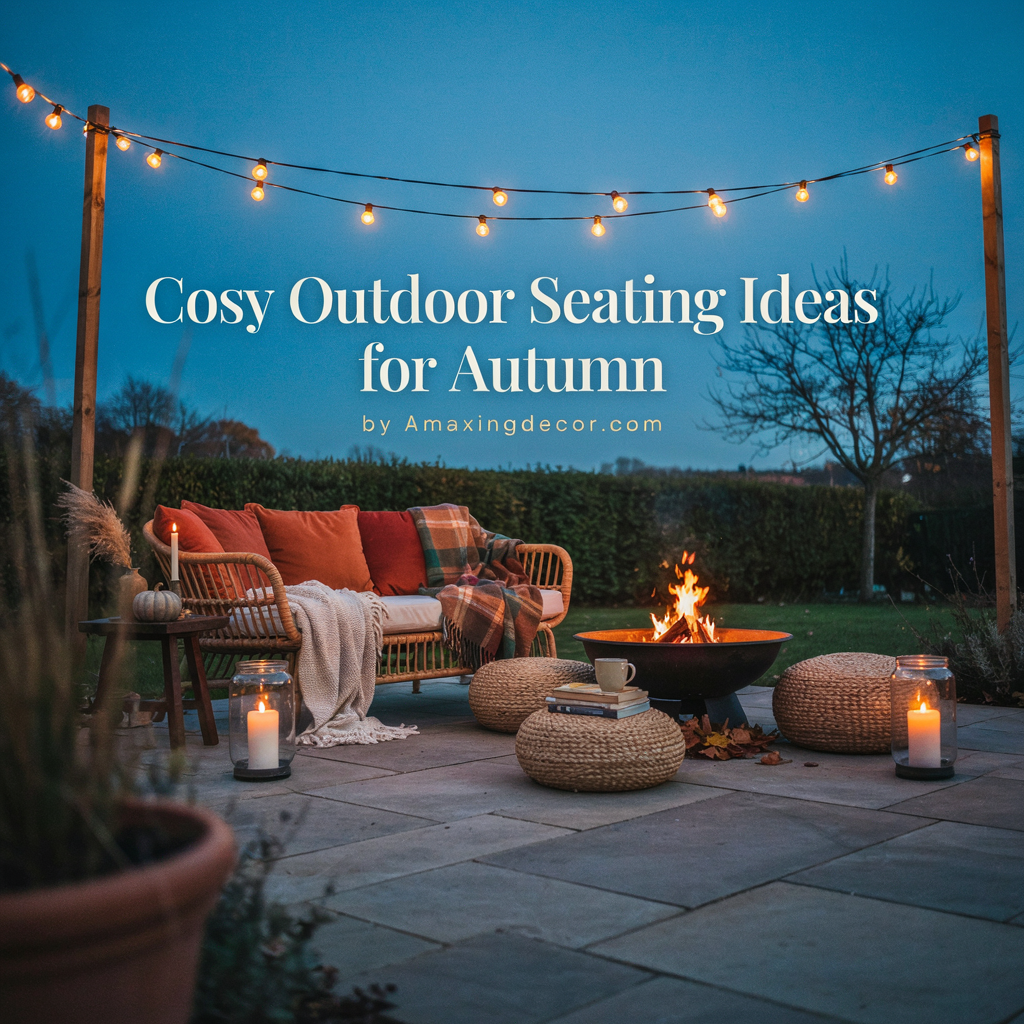
An outdoor seating area can remain one of the most enjoyable parts of the home after summer ends. Cooler air, changing leaves and earlier sunsets create a different atmosphere—one that suits warm drinks, relaxed conversations and quiet evenings under a blanket.
The challenge is making the space feel comfortable without treating it like an indoor room. Autumn brings damp surfaces, stronger winds and quickly changing temperatures, so every item needs to be chosen and arranged with the weather in mind. Soft textiles can add warmth, but they may need to be brought inside. Lighting can create atmosphere, but it must be suitable for outdoor use. Fire and heaters require clearances, ventilation and careful supervision.
The best cosy outdoor seating ideas balance comfort, practicality and safety. Whether you have a large covered patio, a small balcony, an exposed deck or one quiet corner of the garden, the following steps will help you create a welcoming space for autumn.
Cosy Outdoor Seating Ideas for Autumn
Start by choosing the right location
Before buying cushions, lanterns or a fire pit, decide where the seating should go. The position has more influence on comfort than decorative accessories.
Observe the garden at the time you are most likely to use it. A spot that is pleasant at midday may be shaded and exposed to wind by early evening. Look for:
- Protection from the prevailing wind
- Any late-afternoon or evening sunlight
- A dry, level and stable surface
- Safe access from the house
- A clear view of the garden
- Distance from bins, busy roads and noisy equipment
- Access to suitable exterior lighting
- Drainage after rain
- Safe clearances from buildings, fences and plants if heat is planned
An existing wall, hedge or fence may provide useful shelter. However, solid barriers can also create turbulent wind or trap smoke, so assess the exact position rather than assuming every enclosed corner will be comfortable.
Plan the purpose of the seating area
An attractive arrangement can still be unsuccessful if it does not support how the space will be used. Decide on the primary activity first.
For conversation
Arrange chairs or sofas to face one another with a small table within reach. Avoid placing every seat in a straight line looking towards the house.
For reading
Choose a supportive chair in a sheltered spot with suitable task lighting. A side table for a drink and a container for blankets will make the area more practical.
For outdoor dining
Allow enough space to pull chairs out safely. Use functional lighting above or beside the table and preserve clear routes to the kitchen.
For enjoying the view
Orient the main seat towards the strongest garden feature, such as a tree, border, pond or distant landscape. Keep tall planters and accessories out of the sightline.
For evening entertaining
Plan layered lighting, flexible seating and dry storage. Consider how guests will move between the house and garden after dark.
Trying to make a very small area serve every purpose can result in clutter. Prioritise the activity you will use most often.
1. Arrange seating to encourage conversation
A cosy outdoor area feels connected. Place a bench or sofa opposite two chairs, or turn individual chairs slightly towards one another. A circular or L-shaped arrangement usually supports conversation better than furniture lined around the perimeter.
Keep the distance comfortable enough for people to speak without raising their voices. Place a coffee table, fire table or group of smaller side tables in the centre only when there is still plenty of legroom and a safe route through.
On a narrow patio, position a bench against the longest wall and add one or two movable chairs. This creates flexibility without permanently consuming the whole space.
2. Anchor the area with an outdoor rug
An outdoor rug visually defines the seating zone and softens hard paving or decking. Choose a design specifically made for exterior use, with drainage and cleaning requirements suited to the location.
The rug should be large enough for at least the front legs of the main seats to rest on it. A tiny rug floating beneath the coffee table can make the arrangement look disconnected.
Rust, olive, beige, brown and muted checks suit autumn without becoming overly seasonal. Use an appropriate non-slip solution where recommended and make sure the rug lies flat. In prolonged wet weather, clean, dry and store it according to its care instructions.
3. Add cushions in autumn colours
Outdoor cushions provide the quickest change from a summer palette to an autumn one. Try rust, olive, mustard, burgundy, caramel or warm neutral shades.
Mix a small number of plain and patterned designs rather than covering every seat. One check, stripe or subtle botanical print can provide enough movement when combined with two or three solid colours.
Even outdoor-labelled cushions have care limits. Follow the manufacturer’s information and store them in a dry, ventilated place when severe weather is expected. Waterproof does not always mean comfortable, breathable or suitable for permanent exposure.
4. Keep blankets ready but store them properly
Blankets make an autumn seating area immediately more inviting. Wool-look, fleece and outdoor-specific throws can all work, depending on the conditions and care requirements.
Place clean, dry throws in a lidded outdoor storage box or bring them from indoors when needed. An open basket looks attractive for a photograph but is not suitable permanent storage in a damp garden.
Avoid leaving textiles near flames, heaters or wet ground. Wash and dry them regularly, particularly if they are used by several people or exposed to food and drinks.
5. Introduce shelter from wind
Reducing wind can make a greater difference than adding another blanket. Existing walls and hedges may help, while slatted screens, trellis with suitable planting or purpose-designed garden screens can provide more controlled protection.
Solid screens must be securely installed and capable of coping with local wind exposure. Lightweight decorative panels may become dangerous in a storm. Check planning, boundary and tenancy requirements before adding permanent structures.
Do not enclose an area used with a fuel-burning heater or fire without confirming the product’s ventilation and clearance requirements. Wind protection should never create an unsafe semi-enclosed combustion space.
6. Add overhead cover where appropriate
A pergola, veranda, canopy or large parasol can protect against light rain and make a seating area feel more intimate. The structure also provides a visual ceiling, helping an open patio feel like a defined outdoor room.
Every type of cover has limitations. A summer parasol may not be suitable for strong autumn wind, and a fabric canopy may need to be removed and stored. Retractable systems should be closed when weather conditions exceed their specifications.
Permanent roofs, pergolas and attached structures may require professional design, secure foundations or regulatory checks. Do not improvise load-bearing overhead structures.
What Is a Pergola? Discover Its Benefits and Uses
7. Create a sense of enclosure with planting
Planters can soften the edges of a patio and make the seating feel protected. Place taller plants behind or beside seats, with lower containers nearer the front.
Evergreen shrubs, grasses and foliage plants can maintain structure as summer flowers fade. Suitability varies by climate, exposure and container size, so select plants for the actual conditions rather than appearance alone.
Use stable, weather-resistant planters with open drainage holes. Keep them out of walking routes and avoid tall lightweight pots that can topple in wind.
8. Use warm, earthy colours
An autumn seating scheme feels more cohesive when the colours relate to the garden. Rust, olive, ochre, brown, burgundy and cream echo leaves, bark and fading seed heads.
Choose one main neutral, one autumn colour and one darker accent. For example:
- Beige seating, rust cushions and charcoal lanterns
- Natural wood, olive textiles and antique-brass details
- Grey furniture, burgundy cushions and cream blankets
- Black metal chairs, camel-coloured textiles and terracotta pots
Repeating the colours in planters, cushions and tableware will make the space feel intentional.
9. Choose furniture that suits autumn weather
If you are buying or replacing outdoor furniture, consider maintenance as carefully as style. Powder-coated metal, treated timber, woven synthetic materials and suitable outdoor fabrics each have different strengths and care needs.
Check the manufacturer’s guidance for cleaning, covers, storage and winter exposure. Timber may need periodic treatment, metal fixings can corrode and woven furniture may trap dirt if neglected.
Comfort matters as well. Deep lounge furniture looks inviting but needs substantial dry cushion storage. A wooden bench with removable pads may be easier to manage in an exposed garden.
10. Add a coffee table or several side tables
A surface for mugs, books and snacks makes the seating area usable. In a small layout, two lightweight side tables can be more flexible than one large coffee table.
Choose stable furniture suited to outdoor conditions. Rounded corners may be preferable in a tight space, while a table with a raised edge can help contain minor spills.
Avoid filling the table with permanent decorations. Leave enough clear area for the way the space will actually be used.
11. Create a central focal point
A seating group feels complete when it has something to gather around. This could be a low table, substantial planter, bowl of seasonal foliage or a properly installed fire feature.
The focal point should match the function and scale of the area. A large fire pit may overwhelm a small patio, while a tiny ornament will disappear within a wide seating arrangement.
If heat or flame is not suitable, a group of outdoor lanterns with flameless candles can provide visual warmth without becoming the physical centre of every activity.
12. Layer functional and atmospheric lighting
Earlier sunsets make lighting essential. Start with functional illumination for steps, paths, doors and changes in level. Then add softer light around the seating area.
Useful layers include:
- Proper exterior wall or post lights for general visibility
- Outdoor-rated table or floor lamps
- Lanterns with battery-operated candles
- Lights integrated into steps or low walls
- Outdoor-rated festoon or string lighting installed correctly
Warm-white light generally creates a cosier atmosphere than cool white. However, decorative lighting must not leave pathways too dark to navigate safely.
All electrical items, plugs, connections and extension equipment must be suitable for outdoor use and installed according to their instructions. Fixed wiring should be handled by a competent electrician.
13. Hang festoon lights with restraint
Festoon lights can define the seating zone and create a ceiling effect beneath a pergola or across a patio. Use one clear route rather than creating a web of cables.
Attach the lights to appropriate supports and keep them high enough to avoid contact with heads, branches and furniture. Do not run ordinary indoor cables outside or leave plugs and connectors exposed.
The structure supporting the lights must be stable. Do not attach them to weak branches, temporary poles or anything likely to move significantly in wind.
14. Group lanterns at different heights
A cluster of two or three lanterns beside the seating area provides low-level glow and visual depth. Black metal suits modern spaces, while aged brass, copper and weathered finishes create a warmer look.
Use outdoor-suitable battery candles, particularly around blankets, dry leaves, children and pets. Weight or secure lanterns where wind is a concern and keep them away from the main walking route.
One grouped arrangement usually looks more considered than small lanterns scattered around every edge of the patio.
15. Consider safe outdoor heating
An outdoor heater may extend the time you can sit outside, but selection and positioning require careful thought. Follow the exact manufacturer’s instructions for ventilation, clearances, weather exposure, fuel handling and permitted locations.
Never use a fuel-burning outdoor appliance inside a home, shed, tent, conservatory or other enclosed space. Carbon monoxide has no colour or smell and can be fatal. Do not assume a roofed or screened area is sufficiently open without checking the product requirements.
Electric heaters require suitable outdoor electrical provision and safe cable management. Heating should supplement warm clothing and shelter, not encourage unsafe use during unsuitable weather.
16. Use a fire pit only where it is appropriate
A fire pit creates a strong focal point, but it is not suitable for every garden, balcony, tenancy or local area. Check property rules, local restrictions, product instructions and insurance implications before use.
Place it on a stable, non-combustible surface with the required clearance from buildings, fences, overhead structures, furniture, plants and combustible items. Keep water or an appropriate extinguishing method available and supervise the fire continuously.
Smoke can affect neighbours and may travel unpredictably in wind. Never use treated timber, rubbish or unsuitable fuel. Extinguish the fire fully and deal with ash according to the product guidance.
17. Create warmth without a flame
If a heater or fire is impractical, concentrate on shelter, clothing, textiles and light. Seat pads reduce contact with cold furniture, blankets protect legs and a wind screen may improve comfort significantly.
Serve warm drinks in insulated mugs and use a pre-warmed heat pad or outdoor-appropriate product according to its instructions. Avoid improvised electrical heating or indoor appliances outside.
The visual impression of warmth also matters. Amber lighting, rust textiles and timber can make an area feel cosier even when no fire is present.
18. Add an autumn table arrangement
Keep table decoration low and robust. A shallow bowl with small pumpkins, pine cones or suitable seasonal foliage can create a focal point without taking over the surface.
Use materials that can tolerate the conditions and bring delicate arrangements indoors after use. Avoid loose leaves or lightweight objects that will blow across the garden.
The Complete Autumn Home Décor Guide.
A tray can group mugs, lanterns and small accessories while making them easier to move when rain begins.
19. Bring in autumn container planting
Planting makes the seating area feel connected to the rest of the garden. Use containers with grasses, heuchera, small evergreens or seasonal flowers suited to the location.
Vary height but keep the tallest plants away from important views and lighting. Repeating one plant or pot colour in several places is usually more effective than using many unrelated varieties.
Check drainage, raise suitable pots where necessary and move vulnerable containers before severe weather. Do not allow irrigation or rainwater to create slippery patches around seating.
Autumn Garden Checklist: What to Do Before Winter Arrives
20. Use natural textures
Wood, woven fibres, stone, terracotta and textured textiles help an outdoor area feel relaxed. Mix two or three materials rather than buying a fully matching set.
A timber bench, woven-look chair and stone-topped table can work together when they share a similar colour temperature. Repeat one material in a smaller detail, such as a wooden tray or terracotta planter.
Natural materials have different weathering requirements. Follow care instructions and avoid leaving indoor baskets, untreated accessories or absorbent décor permanently outside.
21. Add privacy without closing the space completely
Trellis, planting, slatted screens and outdoor curtains can reduce overlooking. Partial screening often feels more comfortable than a completely enclosed box and allows better airflow.
Outdoor curtains should be secured appropriately and brought in or tied back during unsuitable weather. Screens must be firmly fixed and should not obstruct shared boundaries, access or sightlines needed for safety.
If the seating area includes any combustion appliance, privacy measures must not compromise ventilation or required clearance.
22. Make a small patio feel cosy
A small patio needs fewer but better-proportioned pieces. Choose a compact bench or two chairs, one small table and vertical planting. Avoid pushing furniture against every edge; a little breathing space will make the arrangement feel intentional.
Foldable or stackable furniture provides flexibility. Wall-mounted exterior lighting and narrow planters preserve floor space.
Use one strong colour repeated across cushions and pots. Too many patterns and tiny accessories can make a small area feel more cluttered than cosy.
23. Create a cosy balcony seating area
On a balcony, building rules, weight limits, wind exposure and fire restrictions come first. Check what is permitted before adding screens, planters, lights or heaters.
Choose low, stable furniture and secure lightweight objects. Avoid anything that can fall from the balcony or allow water to drain onto areas below. Rail-mounted planters and screens require purpose-designed fixings and permission where applicable.
Many balconies prohibit barbecues, fire pits and fuel-burning heaters. A blanket, seat pad, wind-resistant lantern and small outdoor rug may provide all the comfort needed without heat or flame.
24. Create a sheltered deck corner
Decking can form a comfortable seating platform, but it becomes slippery when leaves, algae and moisture accumulate. Sweep it regularly and clean it using a method appropriate for the material.
Use a stable furniture layout and keep gaps between boards clear enough for drainage. An outdoor rug must not trap moisture for long periods or create curled edges.
Fire features require particular caution on or near combustible decking. Never assume that a small protective mat makes an unsuitable installation safe; follow the appliance, surface and local requirements.
25. Make a pergola feel like an autumn room
A pergola gives the seating area a strong structure and makes lighting, planting and furniture feel connected. Add outdoor curtains or screens only where they can be safely secured and do not create dangerous wind loads.
Use festoon lights, a large rug and a clear furniture arrangement to establish the room-like feeling. Autumn planting at the posts can soften the structure without overfilling it.
Check beams, fixings and any retractable cover before windy weather. Do not hang heaters, heavy lights or swings from a pergola unless it was designed and assessed for that load.
26. Set up a simple outdoor drinks station
A small trolley or side table reduces trips indoors and helps the seating area function for guests. Use it for mugs, a flask, napkins and a tray rather than leaving food and drinks outside for long periods.
Choose a stable, weather-suitable piece and return it to shelter after use if required. Keep hot drinks away from the edges and use insulated containers with secure lids.
Warm apple drinks, tea, coffee or hot chocolate can reinforce the autumn atmosphere without requiring elaborate equipment outdoors.
27. Include practical storage
Cosy seating depends on having dry cushions and blankets ready to use. A weather-resistant storage box can hold outdoor textiles if the manufacturer confirms it is suitable and the contents remain dry and ventilated.
Position the box where the lid can open fully without blocking paths. Do not overload it, allow children to climb inside or assume it can double as seating unless it is specifically designed for that purpose.
For items that must remain completely dry, indoor storage may still be the safest choice.
28. Keep the route from the house clear
The pathway between the back door and seating area should remain unobstructed and properly lit. Remove fallen leaves, secure loose rugs and repair unstable paving.
Guests may carry hot drinks while walking outside, so avoid decorative objects along narrow routes. Steps and changes in level need clear visual contrast and sufficient light.
An attractive seating area will be used more often when reaching it feels easy and safe.
29. Prepare the area for wet weather
Autumn rain can arrive quickly. Decide in advance which items must be brought inside and where they will go. A tray for small accessories and a nearby storage place make the change easier.
Use furniture covers only as directed and allow items to dry before covering them for extended periods. Trapped moisture can encourage mould and damage finishes.
Check drainage after heavy rain. Pooled water beneath furniture, rugs or pots signals a practical issue that decoration will not solve.
30. Create a routine for closing the space
An autumn seating area lasts longer when it is reset after use. Before going indoors:
- Switch off heaters and lighting as required.
- Fully extinguish any permitted fire.
- Remove food, drinks and rubbish.
- Store cushions and blankets dry.
- Secure or bring in lightweight objects.
- Close parasols, canopies or retractable covers as instructed.
- Check that doors and storage boxes are locked where necessary.
A five-minute routine protects the furniture and ensures the garden is left safe overnight.
Cosy outdoor seating layouts for different spaces
Small paved corner
Use a compact two-seat bench against the wall, one movable chair and a round side table. Add a tall planter behind the chair and a lantern beside the bench.
Long narrow patio
Place a bench along one long edge with two lightweight chairs opposite. Use a narrow rectangular table and keep one side completely open as the walking route.
Large patio
Create a defined conversation zone with an L-shaped sofa or facing seating. Use an appropriately sized rug and central table, then place planters around the outer corners.
Deck
Keep furniture legs stable between board gaps and preserve drainage. Position seating away from exposed edges and use low-level lighting around steps.
Covered pergola
Place the main sofa against the most sheltered side, with chairs angled inward. Add lighting overhead only where the structure and product allow it.
Balcony
Choose two compact chairs and a folding table, or one narrow bench with storage where permitted. Keep the rail and exit route completely clear.
Autumn outdoor seating colour schemes
| Colour scheme | Overall effect | Suggested use |
|---|---|---|
| Rust, cream and olive | Earthy and welcoming | Cushions, throws, planters |
| Charcoal, camel and wood | Modern and warm | Furniture, rug, timber table |
| Burgundy, grey and brass | Rich and sophisticated | Cushions, lanterns, tableware |
| Mustard, brown and black | Bold but grounded | Accent cushion, pots, lighting |
| Beige, terracotta and green | Natural and relaxed | Rug, pots, planting |
Use the lightest shade across the largest area, the main autumn colour in smaller textile or planter details and the darkest shade to define edges through lanterns or furniture frames.
Budget-friendly cosy outdoor seating ideas
You do not need a completely new furniture set to make an outdoor area work for autumn.
- Reposition existing chairs in a conversation layout.
- Clean the furniture and surrounding paving thoroughly.
- Add two new cushion covers rather than replacing every cushion.
- Bring out blankets only when the area is in use.
- Move suitable planters from elsewhere in the garden.
- Use one group of outdoor lanterns instead of many small lights.
- Repurpose a stable outdoor stool as a side table.
- Add a tray to make indoor accessories easy to carry back inside.
- Use an existing neutral outdoor rug if conditions allow.
- Improve shelter and lighting before spending money on decorative objects.
Comfort often comes from layout, dryness and wind protection more than accessories.
Common outdoor seating mistakes in autumn
Treating indoor accessories as weatherproof
Indoor rugs, cushions, baskets and lamps may absorb water or become unsafe. Check every product before taking it outside.
Focusing on blankets but ignoring wind
A wind-exposed area remains uncomfortable even with several throws. Improve the location or shelter first.
Making the area too enclosed
Screens and curtains can create comfort, but they may also reduce ventilation. This is especially dangerous around fuel-burning equipment.
Leaving cushions under covers while damp
Covering wet textiles can encourage odour, mould and damage. Allow everything to dry and follow care guidance.
Using decorative lighting as the only light
Lanterns and string lights may not illuminate steps and paths sufficiently. Retain proper functional exterior lighting.
Buying a fire pit before planning the layout
Required clearances may make a fire feature unsuitable for the space. Check rules, dimensions and safety information first.
Blocking paths with pots and furniture
Autumn evenings are darker and surfaces may be wet. Preserve clear, well-lit walking routes.
Final thoughts
A cosy autumn seating area begins with location and layout. Find the most sheltered usable part of the garden, arrange seats around the activity you enjoy and make sure the route from the house is safe after dark.
Then add comfort in layers: an outdoor rug, a small number of cushions, dry blankets, warm lighting and seasonal planting. Choose materials that can cope with the weather and create a simple routine for storing textiles and securing the space after use.
Heat and fire are optional, not essential. Shelter, appropriate clothing, warm drinks and thoughtful lighting can create an inviting atmosphere without adding combustion equipment. When a heater or fire feature is used, its exact instructions, ventilation requirements and safety clearances must shape the whole design.
For more seasonal colour palettes and ideas that connect your garden with the home, explore The Complete Autumn Home Décor Guide.
Frequently asked questions
How can I make an outdoor seating area feel cosy?
Begin with a sheltered location and arrange the seats to face one another. Add a properly sized outdoor rug, a few cushions, dry blankets and warm layered lighting. Use planters to soften the edges and choose a controlled autumn colour palette. Keep the walking route clear and functional.
What are the best colours for an autumn outdoor seating area?
Rust, olive, mustard, burgundy, warm brown, camel, cream and charcoal all work well. Choose one main neutral, one seasonal colour and one darker accent. Repeating those shades across cushions, planters and lanterns will make the area feel coordinated.
How can I keep outdoor seating warm without a fire pit?
Reduce wind, choose padded seating, provide dry blankets and encourage warm layered clothing. Use warm drinks and amber-toned lighting to reinforce the atmosphere. A properly selected outdoor heater may be an option, but only when its installation, ventilation and clearance instructions can be met.
Can I leave outdoor cushions outside during autumn?
That depends on the product and conditions. Even outdoor cushions may last longer when stored dry during prolonged rain, storms and winter weather. Follow the care label and use suitable ventilated storage. Never store cushions while they are wet.
What lighting is best for an autumn patio?
Use proper exterior lighting for paths and steps, then add warm-white outdoor-rated lamps, lanterns or festoon lights for atmosphere. All products and connections must be suitable for outdoor use. Decorative lighting should never leave access routes dangerously dark.
How do I create a cosy seating area in a small garden?
Choose one compact bench or two chairs, a small table and vertical planting. Use wall-mounted lighting where suitable and limit accessories to a rug, two cushions and one lantern group. Concentrating the scheme in one corner will feel more intentional than scattering furniture around the garden.
Can I use a patio heater under a pergola?
Only if the exact heater’s manufacturer explicitly permits that type of location and every ventilation, overhead-clearance and side-clearance requirement is satisfied. Pergolas vary greatly in roof coverage and materials. If the instructions are unclear, do not use the heater there.
Is a fire pit suitable for decking?
Not automatically. Deck material, appliance type, required clearances, local restrictions and manufacturer instructions all matter. A small mat does not make an unsuitable installation safe. Seek professional advice when necessary and never improvise around combustible surfaces.
How can I protect my outdoor seating area from autumn rain?
Use furniture and covers designed for exterior conditions, provide suitable overhead shelter where permitted and maintain good drainage. Store textiles dry and close parasols or retractable covers when weather conditions require it. Do not cover damp furniture for long periods.
How do I transition an autumn seating area into winter?
Remove soft furnishings that cannot tolerate winter conditions, store the rug if required and replace fading seasonal plants. Keep durable lanterns, neutral furniture and structural evergreens. Inspect covers, fixings and drainage before storms or freezing weather.