


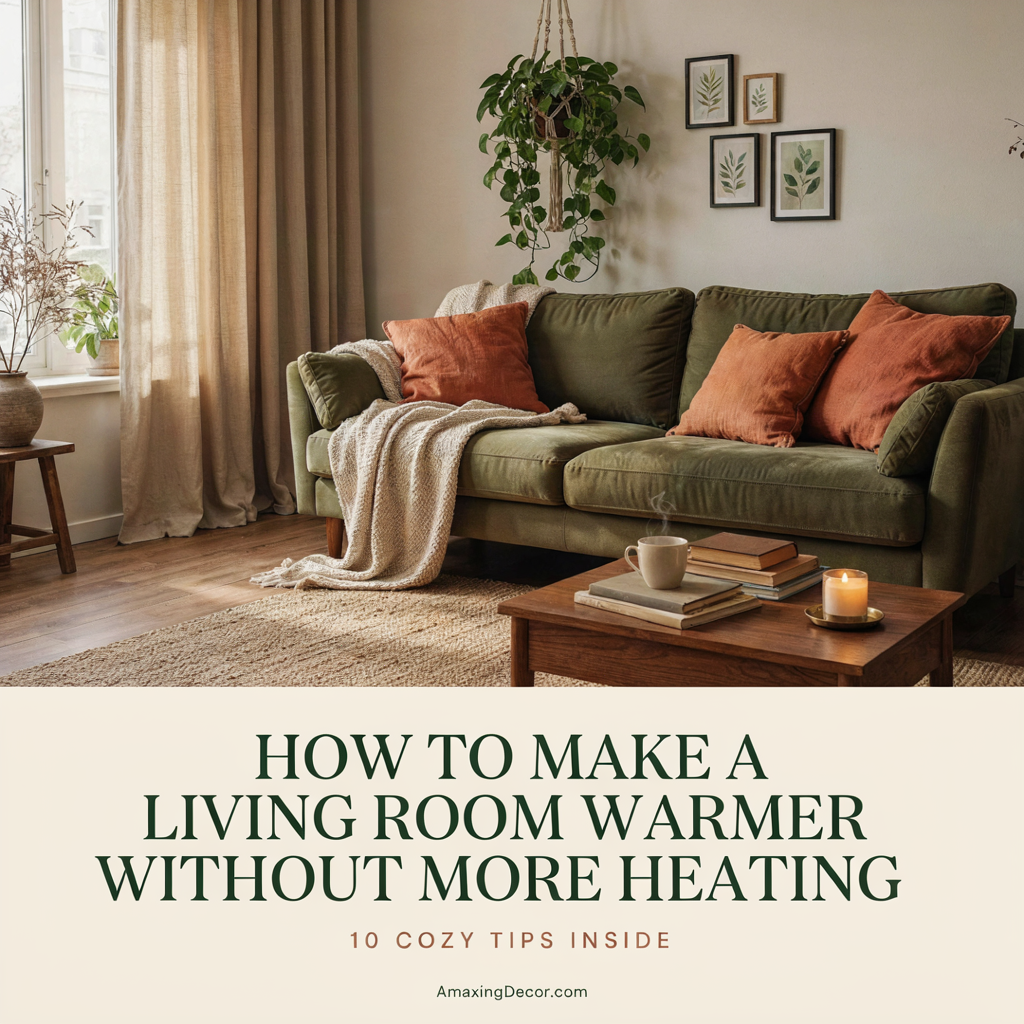
A living room can feel cold even when the thermostat shows a reasonable temperature. Hard surfaces, cool lighting, exposed windows, an awkward furniture layout and large areas of grey or white can all make a space seem less comfortable than it really is. At the same time, draughts and cold surfaces can create genuine discomfort around seating areas.
Fortunately, you do not always need to turn up the heating to make the room feel more inviting. Thoughtful furniture placement, warmer lighting, properly fitted window treatments and a few well-chosen textiles can change both the atmosphere of the room and the way it feels in everyday use.
This guide explains how to make a living room warmer through décor and practical adjustments. It includes ideas for sofas, floors, windows, walls, lighting and accessories, along with renter-friendly and budget-conscious options.
These ideas are intended to complement appropriate home heating, not replace it. If a room remains unusually cold, damp or difficult to heat, investigate the underlying cause and seek suitable professional advice where necessary.
How to make a living room warmer: start with the cause
Before adding cushions and blankets, identify what is making the room feel uncomfortable. The cause may be physical, visual or a combination of both.
Common reasons include:
- Draughts around windows, doors or unused fireplaces
- Seating positioned beside a cold window or external wall
- Bare wooden, laminate or tiled flooring
- Large expanses of glass
- Thin or poorly fitted curtains
- One bright overhead light and dark corners
- Cool-toned bulbs
- A grey, blue-white or high-contrast colour scheme
- Sparse furniture in a large room
- Furniture pushed against every wall
- Too many hard, glossy surfaces
- Clutter that makes the room feel unsettled rather than cosy
Spend an evening in the room and notice where discomfort occurs. Is the sofa near a draught? Do your feet feel cold on the floor? Does the room become gloomy as soon as daylight fades? Does the main ceiling light make everything look stark?
Once you understand the problem, you can make targeted changes instead of buying random seasonal accessories.
Start with the furniture layout
Furniture placement has a major effect on how comfortable a living room feels. The most attractive layout on a floor plan may not work well during winter if the main seat is beside a draught or facing away from the room’s warmest focal point.
Move seating away from cold spots
If possible, move the sofa and armchairs slightly away from large windows, external doors and particularly cold walls. Even a modest gap can make seating more comfortable and allow air to circulate.
Avoid pressing a sofa tightly against a radiator. It can obstruct the movement of warm air and expose upholstery to unnecessary heat. Follow the radiator or heating manufacturer’s guidance and maintain appropriate clearance.
Bring the seating closer together
In a large room, furniture placed around the perimeter can make the centre feel empty and the conversation area disconnected. Bring the sofa and chairs closer together, using a rug and coffee table to define the group.
The arrangement should feel intimate without restricting movement. Leave clear routes to doors, windows and other rooms.
Turn chairs towards the room
A chair angled towards the sofa, fireplace or coffee table feels more welcoming than one sitting rigidly against a wall. A small side table and reading lamp can turn an unused corner into a comfortable winter seat.
Give the room a visual centre
A fireplace is a natural focal point, but it is not essential. You can create warmth around:
- A large piece of artwork
- A wooden media unit
- A bookcase with integrated lighting
- A console table and shaded lamp
- An indoor tree or tall plant
- A substantial vase of winter branches
A clear focal point helps the room feel settled. It also prevents the eye from being drawn towards a cold window or empty corner.
Add a properly sized living-room rug
A rug is one of the most effective ways to soften a room with hard flooring. It adds colour and texture, reduces the visual expanse of the floor and feels more comfortable underfoot.
Choose the right rug size
The rug should connect the main seating rather than float in the middle of the room. In many layouts, at least the front legs of the sofa and armchairs should sit on it. A larger rug usually makes the room feel more generous and cohesive than several small rugs.
Before buying, mark the proposed dimensions on the floor with low-tack tape. Check door clearance, walking routes and the relationship between the rug and furniture.
Select a warming texture
Wool and wool-blend rugs can provide a naturally cosy appearance, while washable synthetic styles may be more practical for homes with children or pets. Flat-woven rugs are easier to maintain, whereas a deeper pile creates a softer look.
Choose according to the way the room is used, not appearance alone. Very thick rugs may be awkward beneath doors, wheeled furniture or for anyone with limited mobility.
Use a suitable underlay
A rug underlay can help keep the rug stable and add a little cushioning. Choose one compatible with both the rug and the flooring beneath it. Keep corners flat and walking routes secure to reduce trip risks.
If a large rug is outside the budget, a well-positioned runner or medium rug near the main seating can still soften the space—provided it does not look isolated or create a hazard.
Dress windows to reduce the feeling of cold
Windows are often where a room looks and feels coldest. Bare glass reflects darkness at night, and poorly fitted treatments may do little to reduce draughts.
Use curtains that look substantial
Full-length curtains create a stronger sense of warmth than short, lightweight panels. A lined fabric hangs more neatly and looks visually richer. Velvet, heavy cotton, textured weaves and good-quality blends can all work, depending on the room.
Where practical, hang the curtain pole above the window and extend it beyond the frame. This lets curtains sit mostly clear of the glass when open, admitting more daylight, while allowing them to cover the opening properly when closed.
Layer curtains and blinds
A blind provides privacy and neatness during the day, while curtains add softness at night. Combining the two gives the window more visual depth and flexibility.
Do not let curtains cover radiators or other heat sources. If a radiator is directly below the window, use a suitable curtain length or another treatment that does not trap heat behind the fabric.
Close curtains at the right time
Open curtains fully when winter sunlight reaches the room. Close them as daylight fades to reduce the stark reflection of dark glass and help the space feel enclosed and comfortable.
Keep window treatments away from open flames, portable heaters and other heat sources. Check that cords and chains are fitted and managed safely, particularly in homes with children.
Find and address draughts responsibly
Soft furnishings can disguise a cold-looking room, but they cannot solve a significant draught. Check around windows, external doors, skirting boards and unused fireplaces.
Simple measures may include:
- Adjusting a poorly closing window or door
- Replacing worn seals with a product suitable for the surface
- Using a door draught excluder where it will not create a trip risk
- Closing internal doors to separate less-used areas
- Adding a letterbox cover or suitable brush system
- Using a chimney draught solution designed for the specific fireplace
Do not block intentional ventilation, air bricks, trickle vents or any opening required for a fire, stove, boiler or other appliance. If you are unsure whether an opening is necessary, seek qualified advice before sealing it.
Persistent damp, mould, condensation or unusually cold walls may indicate a problem that needs more than decoration. Address the cause instead of hiding it behind furniture or heavy fabric.
Use layered lighting instead of one ceiling light
Lighting can transform how warm a living room appears after dark. A bright central pendant may provide plenty of illumination, but it can also flatten the room and create harsh shadows.
Build three layers of light
Use a combination of:
- Ambient light for general visibility
- Task light for reading and other activities
- Accent light to illuminate shelves, artwork or architectural details
A typical living room might have a dimmable ceiling fitting, a floor lamp beside the sofa and two smaller table lamps at different heights. You do not need to switch on every light at once; the value lies in having options.
Choose warm-white bulbs
Warm-white light generally makes timber, cream, tan, olive and rust appear richer than cool blue-white light. Check the colour temperature printed on the bulb packaging and use a reasonably consistent tone within the room.
Brightness also matters. A tiny decorative bulb cannot provide enough light for reading, while an excessively bright exposed bulb can cause glare. Match each bulb to the fitting and the task, following the manufacturer’s maximum wattage and compatibility information.
Add light to dark corners
Dark corners can make a room feel colder and smaller. A slim floor lamp, shaded table lamp or approved rechargeable lamp can create a welcoming pool of light without requiring a major electrical change.
Position lights so cords do not cross walking routes. Never cover a lamp or use a shade, bulb or dimmer that is incompatible with the fitting.
Choose colours that make the room feel warmer
Colour changes the mood of a room even when its measured temperature stays the same. Warm colours tend to feel more enveloping, but that does not mean painting every wall dark red or orange.
Begin with warm neutrals
Cream, oatmeal, biscuit, mushroom, putty, warm taupe and soft beige make flexible foundations. They can soften a cool room without overwhelming it.
If your walls are grey, you may not need to repaint. Add warm wood, tan, rust, burgundy or olive through textiles and accessories. A grey with brown or green undertones will usually feel warmer than a blue-based grey.
Introduce earthy accents
Useful accent colours include:
- Terracotta
- Rust
- Burnt orange
- Olive green
- Forest green
- Ochre
- Burgundy
- Chocolate brown
- Camel
- Muted plum
Choose one or two and repeat them around the room. For example, a rust cushion can relate to an artwork, a ceramic bowl and a thread within the rug.
Add contrast carefully
A completely beige room can look flat rather than warm. Dark brown, charcoal, black or deep green accents give the lighter colours definition. Use them in smaller amounts through frames, lamp bases, side tables or patterned textiles.
Test paint in the actual room
Paint colours change with daylight, artificial light and direction. Test samples on more than one wall and view them in the morning, afternoon and evening before deciding.
Layer cushions and throws without overcrowding the sofa
Cushions and throws are an easy seasonal update, but more is not always better. A sofa that must be cleared before anyone can sit down is decorative rather than comfortable.
Mix textures, not every pattern
Combine two or three textures such as:
- Brushed cotton
- Wool or wool blend
- Velvet
- Boucle
- Linen blend
- Corduroy
- A restrained chunky knit
If the sofa is patterned, keep most cushions plain. If the sofa is plain, introduce one patterned cushion and draw the remaining colours from it.
Use an edited cushion arrangement
On a standard three-seat sofa, three to five cushions are often enough. Try two larger cushions at the ends, two smaller contrasting cushions and perhaps one lumbar cushion in the centre.
Vary the shapes slightly, but avoid collecting too many tiny cushions. Larger pieces tend to look calmer and more generous.
Keep throws useful
Fold one throw over the sofa arm or place two in a basket within easy reach. Choose materials that suit the household and can be cleaned according to the care label.
A throw should add genuine comfort rather than exist only for photographs. If it constantly slides onto the floor, store it in a basket and bring it out when needed.
Bring more wood and natural texture into the room
Timber, rattan, cane, basketry and ceramics balance cool paint, metal and glass. Their irregular grain and matt surfaces make a room feel more relaxed.
You do not need to replace the furniture. Introduce natural texture through:
- A wooden tray on the coffee table
- Woven storage baskets
- A timber picture frame
- Cane-fronted storage
- Ceramic or stoneware vases
- A wooden lamp base
- Natural-fibre cushion covers
- A bowl made from wood or textured pottery
Mixing wood tones is acceptable. Connect them by repeating each tone or keeping their undertones reasonably compatible. A room often feels more natural with two related wood finishes than with a perfectly matched furniture set.
Make the fireplace feel inviting
Whether working or decorative, a fireplace naturally suggests warmth and can anchor the entire living room.
For a working fireplace or stove
Keep the surrounding area clear and follow all operating, ventilation and maintenance instructions. Do not hang garlands, dry clothing or place baskets and textiles close to the heat source. Use appropriate guards and professional servicing where required.
For an unused fireplace
An empty opening can look dark and neglected. Depending on its condition and ventilation requirements, consider:
- A basket of logs used purely as a visual feature
- A substantial plant in a suitable container
- A group of flameless candles
- A decorative fire screen
- A ceramic vessel or sculptural object
- Painting or restoring the surround
Do not seal or fill an opening until you understand its ventilation requirements. Unknown fireplaces and chimneys should be assessed before alteration.
Style the mantel simply
Use a central artwork or mirror, then balance it with a lamp, vase, candlesticks or a small stack of books. Vary height but leave open space. A crowded mantel can make the room feel visually restless.
Add books, artwork and personal objects
A warm room should look lived in, not staged. Books, framed photographs, collected ceramics and meaningful objects add personality that cannot be achieved through generic seasonal décor.
Group smaller items rather than scattering them across every surface. A tray can unite a candle, a small bowl and coasters. Three pieces of pottery look intentional when arranged together with some breathing room.
Choose artwork that introduces warmth through subject, colour or material. Landscapes, textile art, botanical prints and abstract work in earth tones can all help. Timber or aged-brass frames often look softer than bright chrome, although the best finish depends on the existing interior.
Avoid covering every wall. Empty space allows the most important pieces to stand out.
Use plants and winter branches
Greenery makes a room feel alive during winter. Choose plants that suit the actual light and temperature rather than buying solely for appearance.
A tall indoor tree can soften an empty corner, while a smaller plant on a side table can balance hard furniture. Keep plants away from extreme heat and cold, and check whether the species is safe around children and pets.
Bare branches in a heavy vase offer a lower-maintenance seasonal alternative. They bring height and structure without looking like Christmas décor. Ensure collected material is legal to take, clean and free from insects before bringing it indoors.
Make a large living room feel more intimate
Large rooms can feel impressive during the day but exposed at night. Divide the space into smaller zones rather than trying to fill it with decorative objects.
Create:
- A main conversation area around a large rug
- A reading corner with a chair and floor lamp
- A games or puzzle table
- A small writing desk
- A window seat or plant area
Use lighting to define each zone. Pools of light around seating make the room feel more contained than one very bright ceiling source.
A console table behind a sofa can visually separate areas and provide space for lamps. Open shelving or a low cabinet can also divide a room without blocking light, provided it is stable and does not interrupt walking routes.
Make a small living room feel warm, not cramped
In a small room, warmth comes from cohesion rather than quantity. Choose compact furniture and a limited palette, then use texture and lighting for depth.
Helpful approaches include:
- One generously sized rug rather than several small ones
- Wall lights or a slim floor lamp where surfaces are limited
- Cushion covers instead of storing seasonal cushions
- A storage ottoman for blankets
- Curtains hung high to emphasise height
- One tall branch arrangement instead of many ornaments
- Furniture raised on visible legs to preserve a sense of floor space
- A mirror positioned to reflect a lamp or attractive part of the room
Do not add so many baskets, blankets and cushions that the room becomes difficult to clean or move through. Practical comfort is part of cosiness.
Renter-friendly ways to make a living room warmer
You can make a substantial difference without painting or carrying out permanent work.
Try:
- A large removable rug with a compatible underlay
- Plug-in floor and table lamps
- Full-length curtains where existing fittings allow them
- Removable cushion covers and throws
- Freestanding bookshelves or storage units secured appropriately
- Large framed art displayed using permitted fixing methods
- A folding screen to define an open-plan area
- A door draught excluder that does not damage the property
- Timber, woven and ceramic accessories
Review the tenancy agreement before fixing, painting or modifying anything. Report faulty windows, heating or building defects to the appropriate landlord or agent rather than attempting unsafe repairs.
Budget-friendly changes that have the greatest impact
You do not need to redesign the whole room. Start with changes that affect a large visual area or improve daily comfort.
Rearrange before shopping
Move the sofa away from a cold window, bring chairs closer together and relocate a lamp from another room. A better arrangement may solve much of the problem at no cost.
Change the bulbs
Replacing mismatched cool bulbs with suitable warm-white bulbs can immediately improve the evening atmosphere. Confirm compatibility with each fitting.
Add one large textile
A rug, pair of curtains or substantial throw has more impact than several small ornaments. Choose the item that addresses the room’s weakest area.
Replace cushion covers
Keep the inserts and change only the covers. This costs less and requires less storage.
Shop your home
Bring a wooden tray from the kitchen, a basket from the bedroom or a lamp from the hallway. Objects can look entirely different in a new setting.
Look second-hand
Charity shops, vintage markets and resale sites can be useful for wool rugs, timber side tables, lamps, frames and ceramics. Inspect everything carefully. Electrical items should be safe, undamaged and suitable for use.
Quick changes you can make in one afternoon
If you want an immediate improvement, work through this order:
- Remove clutter from the main surfaces and floor.
- Move seating away from obvious draughts and cold glass.
- Arrange the sofa and chairs into a closer conversation group.
- Place a rug securely beneath the main seating.
- Add a floor or table lamp to the darkest corner.
- Replace mismatched cool bulbs where suitable.
- Close curtains neatly when darkness falls.
- Add two or three coordinated cushion covers.
- Fold one useful throw over the sofa or store it nearby.
- Create one simple display using books, wood, ceramics or branches.
Stop and reassess before buying more. Often the room will already feel calmer and warmer.
What not to do when warming up a living room
Do not block radiators or heaters
Avoid placing sofas, curtains, baskets or blankets directly against a heat source. Follow the appliance manufacturer’s clearance requirements.
Do not seal ventilation openings
Not every gap is an unwanted draught. Some openings provide essential ventilation. Get advice if their purpose is unclear.
Do not use candles as heating
Candles are for light and atmosphere, not meaningful room heating. Use them only on stable, heat-resistant surfaces and never leave them unattended. Flameless versions can provide a similar visual effect with less risk.
Do not overload sockets
Adding several lamps and decorative lights needs sensible electrical use. Inspect cables and plugs, avoid unsafe adaptors and follow current product instructions.
Do not hide damp or mould
Pushing a cabinet against a damp wall or covering mould with fabric does not solve the problem. Investigate moisture, ventilation and building issues properly.
Do not create trip hazards
Secure rugs, manage lamp cables and keep routes around sofas and tables clear. This is especially important when daylight is limited.
A balanced warm living-room formula
If you are unsure where to begin, use this simple formula:
- One warm neutral: cream, oatmeal, mushroom or warm taupe
- One deeper accent: olive, rust, burgundy, navy or chocolate
- One natural material: wood, basketry or stoneware
- Three lighting levels: ceiling, floor and table height
- Two or three textile types: wool, velvet, brushed cotton or boucle
- One large rug: correctly sized for the seating area
- One seasonal focal point: branches, artwork or a styled mantel
- Enough empty space: so the room remains easy to use
This creates variety without making the design chaotic.
Frequently asked questions
How can I make my living room feel warmer without heating?
Move seating away from draughts, add a properly sized rug, close suitable curtains after dark and use warm-white lighting at several heights. Cushions, throws, wood and warmer colours improve the atmosphere, although décor should not replace safe heating when indoor temperatures are genuinely too low.
What colours make a living room feel warmer?
Cream, oatmeal, beige, taupe, camel, terracotta, rust, olive, burgundy and warm brown can make a room feel more inviting. Cool rooms do not always need repainting; introduce warmer colours through rugs, curtains, cushions, art and wood.
How do I make a grey living room feel warmer?
Combine grey with natural timber, cream, tan, rust, olive or burgundy. Replace cool lighting with suitable warm-white bulbs and add textured fabrics. A warm-toned rug can connect the new colours across the room.
Do rugs make a living room warmer?
A rug can make hard flooring feel more comfortable underfoot and visually soften a room. It may provide a modest insulating layer, but the effect depends on the rug, underlay, floor and building. Choose the correct size and secure it safely.
Do curtains help a room feel warmer?
Well-fitted, lined curtains can make windows look less stark and may reduce discomfort near glass. Open them for useful sunlight and close them when darkness falls. Do not cover radiators, heaters or required ventilation.
What lighting makes a living room feel cosy?
Use warm-white light from several sources, including a floor lamp, table lamp and general room light. Shaded lamps usually feel softer than exposed bright bulbs. Add task lighting where people read or work.
How many cushions should I put on a sofa?
There is no fixed rule, but three to five cushions often suit a standard three-seat sofa. The correct number leaves enough space to sit comfortably without removing the entire arrangement.
How can I make a large living room cosier?
Create smaller zones for conversation, reading or games. Use a large rug to anchor the main seating, bring furniture closer together and light each zone separately.
How can I warm up a living room on a small budget?
Rearrange the furniture, move lamps from other rooms, replace unsuitable bulbs, change cushion covers and add one large textile. Second-hand wood furniture, frames and ceramics can introduce warmth affordably.
What should I put in my living room after Christmas?
Replace the tree with a floor lamp, reading chair, indoor plant, basket or tall vase of branches. Keep plain winter textiles and neutral lighting, but remove decorations that are specifically associated with Christmas.
Create warmth through comfort, not clutter
The most welcoming living rooms are not necessarily the darkest or most heavily decorated. They feel warm because the furniture supports conversation, the lighting suits each activity and the textiles soften the surfaces that would otherwise feel exposed.
Begin with the room’s practical weaknesses. Move the sofa away from a draught, give the reading chair a proper lamp and use a rug to connect the seating. Then add warm colour, natural materials and a few personal objects.
These changes can make the living room feel calmer and more comfortable without immediately turning up the thermostat. For a whole-home approach—including bedrooms, kitchens, hallways and post-Christmas styling—read The Complete Winter Home Décor Guide for a Cosy Home.


