


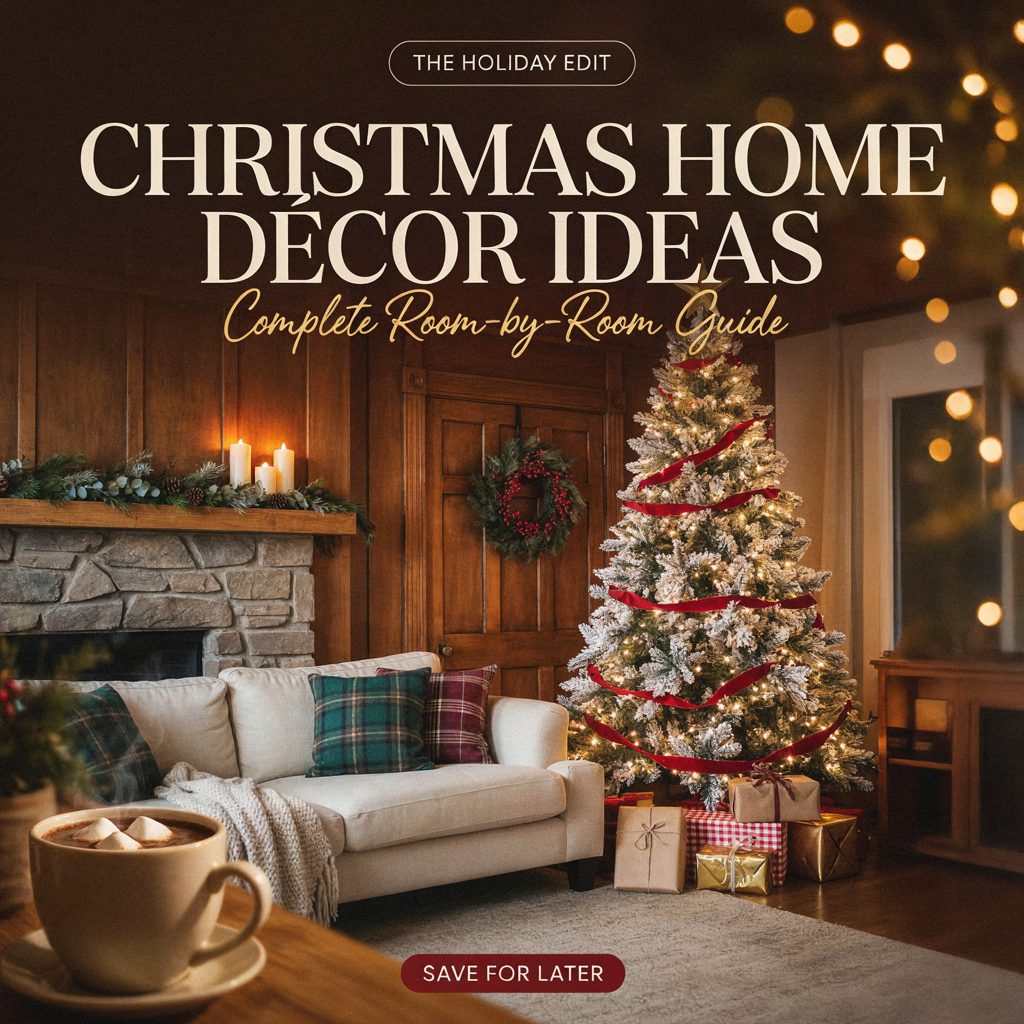
Christmas decorating is about more than placing a tree in the living room. The most welcoming homes create a sense of connection from the entrance to the main gathering spaces, while still allowing each room to keep its own purpose and personality.
That does not mean every room needs garlands, lights and a separate theme. A successful Christmas scheme begins with a clear palette and a few repeated materials. Greenery at the front door can reappear on the mantel. The ribbon used on the tree may return on dining napkins. Warm-white lights can connect the hallway, living room and outdoor entrance without making the home feel overdecorated.
This complete guide brings together Christmas home décor ideas for every main area of the home. It covers planning, colour, Christmas trees, lighting, living rooms, bedrooms, kitchens, dining spaces, hallways, bathrooms, children’s rooms and outdoor entrances. You will also find practical advice for small homes, rented properties, limited budgets, decoration safety and post-Christmas storage.
How to plan your Christmas décor before buying anything
Begin by walking through the home and deciding where Christmas will have the greatest impact. Prioritise the spaces used by your household and guests rather than decorating every room equally.
A practical priority order might be:
- Front entrance or hallway
- Living room and Christmas tree
- Dining area
- Kitchen
- Main bedroom
- Children’s rooms or guest room
- Bathroom and other small spaces
- Garden or front yard
Review the decorations you already own before shopping. Test lights, check baubles for damage, untangle garlands and group everything by colour or room. This makes gaps easier to identify and prevents duplicate purchases.
Ask four questions before adding any new item:
- Where will it be displayed?
- Does it fit the chosen palette?
- Can it be stored safely after Christmas?
- Will it obstruct normal use of the room?
A simple plan saves money and creates a more coordinated result.
Choose a Christmas decorating style
The style should complement the permanent interior rather than compete with it. You do not need to redesign the home for December.
Traditional Christmas décor
Traditional schemes use red, green, gold, tartan, velvet ribbon, warm lights and familiar ornaments. They suit homes with wooden furniture, classic fireplaces and family collections built over time.
Scandinavian Christmas décor
Scandinavian-inspired rooms favour warm white, pale wood, simple greenery, paper stars and handmade ornaments. The look is light and restrained, with texture providing warmth.
Rustic Christmas décor
Rustic decorating combines natural wood, pine cones, dried fruit, woven baskets, linen and evergreen foliage. Muted red or deep green can be added through ribbon and textiles.
Modern Christmas décor
Modern schemes use clean shapes, limited colours and larger statement pieces. Black, white, forest green, champagne and metallic accents work well with contemporary furniture.
Elegant Christmas décor
An elegant scheme relies on repetition, scale and controlled sparkle. Velvet ribbon, glass ornaments, warm metallics and layered lighting create richness without excessive novelty decoration.
Colourful and nostalgic Christmas décor
Bright baubles, handmade ornaments, vintage-style lights and family decorations create a cheerful collected look. Give the variety structure by repeating a few colours around the room.
Christmas colour schemes for every home
Choose one dominant neutral, one main festive colour and one metallic or contrasting accent.
| Colour scheme | Mood | Suggested materials |
|---|---|---|
| Red, green and gold | Traditional and warm | Velvet, tartan, brass, evergreen foliage |
| Forest green, cream and wood | Natural and calm | Linen, timber, paper, pine cones |
| Burgundy, plum and antique brass | Rich and elegant | Velvet, dark glass, aged metal |
| White, silver and pale blue | Cool and wintery | Glass, satin, frosted finishes |
| Black, champagne and warm white | Modern and sophisticated | Matt metal, glass, soft lighting |
| Rust, olive and copper | Earthy and transitional | Wood, foliage, woven textiles |
| Pink, burgundy and gold | Romantic and contemporary | Ribbon, glass, velvet |
| Multicoloured with warm white | Playful and nostalgic | Vintage ornaments, paper and felt |
If the permanent room already contains strong colour, use Christmas decorations that complement it. A blue living room might suit silver, cream and deep green better than bright red. An olive interior can work beautifully with rust, burgundy and aged gold.
Build a whole-home Christmas palette
The rooms do not have to look identical, but they should feel related. Select two or three details to repeat throughout the home:
- One greenery style
- One ribbon colour
- One light colour temperature
- One metallic finish
- One natural material, such as wood or paper
For example, a forest-green and cream scheme could use a green wreath in the hallway, cream ribbon on the tree, green napkins in the dining room and a small evergreen arrangement in the bedroom. The repetition provides continuity without copying the same display everywhere.
How to decorate a Christmas tree
The Christmas tree is often the main focal point, so plan it before smaller room decorations.
Choose the right position
Place the tree where it can be seen and enjoyed without blocking doors, radiators, walkways, windows that need access or the main television view. Measure both height and width before choosing a tree.
Real or artificial tree?
A real tree brings natural scent and irregular character but requires watering, needle management and responsible disposal. An artificial tree provides predictable shape and can be reused for years when stored properly. Neither option is automatically better; choose according to space, maintenance and how often the item will genuinely be used.
Decorate in layers
- Assemble or position the tree securely.
- Shape the branches before adding decorations.
- Install suitable lights according to their instructions.
- Add ribbon or garland if using it.
- Place larger ornaments deeper into the branches.
- Distribute medium ornaments across the visible surface.
- Use smaller decorations to fill remaining gaps.
- Add the topper only when it can be attached securely.
- Finish with a tree skirt, collar or neat base treatment.
Step back frequently and view the tree from normal seating positions. Concentrate ornaments on the visible sides if the tree stands in a corner.
How many decorations does a tree need?
There is no correct number. Branch density, ornament size and personal style matter more than formulas. Begin with the meaningful decorations you already own, then fill obvious gaps. A tree with some visible greenery can look just as complete as a heavily covered one.
Christmas lighting ideas
Lighting creates the atmosphere that makes Christmas décor feel special. Use several layers rather than depending entirely on the ceiling light.
Warm-white lights
Warm white suits traditional, rustic and elegant interiors. It complements red, green, gold, wood and cream.
Cool-white lights
Cool white creates a crisp winter effect and works with silver, blue and white. It may feel harsh in a warm-toned room, so test it beside existing lamps.
Multicoloured lights
Multicoloured lights bring nostalgia and energy. Keep surrounding ornaments connected through repeated colours so the tree remains coherent.
Safe lighting principles
- Use lights intended for the exact indoor or outdoor location.
- Inspect cables and plugs before installation.
- Follow connection and maximum-string instructions.
- Keep cables away from walking routes and doors.
- Do not trap cables beneath rugs or furniture.
- Keep lights away from combustible materials where required.
- Turn decorations off when instructed or when the home is unattended.
- Use a competent electrician for fixed exterior work.
Battery-operated flameless candles can provide low-level glow around garlands, tables and bedrooms without an open flame.
Christmas living room décor ideas
The living room often carries most of the visual decoration. Choose two or three focal zones rather than styling every surface.
Make the tree the main feature
Allow space around the tree so it can be appreciated. Connect it to the rest of the room through matching cushion colours, ribbon or greenery.
Style the fireplace and mantel
Use a garland, stockings and one group of taller objects. An asymmetrical garland can feel natural and modern; a balanced arrangement suits a traditional room.
Keep every decoration and stocking at the clearances required by the fireplace or stove. Remove combustible items before use when necessary.
Update cushions and throws
Replace only a few everyday cushion covers. Velvet green, burgundy, tartan, cream boucle or a restrained festive pattern can change the room without creating storage for an entire extra set.
Create a Christmas coffee-table arrangement
Group a small tree, bowl of baubles and flameless lantern on a tray. Keep enough clear surface for drinks and everyday use.
Decorate shelves selectively
Add a miniature wreath, paper star or small greenery arrangement among existing books and ceramics. Leave some shelves untouched to avoid visual clutter.
Christmas fireplace ideas
A fireplace naturally attracts attention, but it must remain safe and functional.
Consider:
- A greenery garland secured to the mantel
- Stockings hung only where heat and fire allow
- A large central wreath or mirror
- Groups of flameless candles at different heights
- Brass candlesticks used without flames
- A restrained collection of wooden or ceramic houses
- Pine cones, bells or ribbon repeated from the tree
If the fireplace is active, follow the manufacturer’s clearance guidance. Dried foliage, paper, fabric and ribbon should not be exposed to flame, sparks or excessive heat.
Christmas dining room décor ideas
The dining room needs to remain practical for serving food and seating guests.
Choose a simple centrepiece
Use a low greenery arrangement, group of small trees, bowl of baubles or several sturdy candle-style holders with flameless lights. Guests should be able to see across the table.
Layer the table
Begin with the tablecloth or runner, then add placemats, crockery, glassware and napkins. The centrepiece should come last so it fits the remaining space.
Repeat the home palette
Use ribbon from the tree as a napkin detail or repeat the main metallic finish through cutlery, napkin rings or small ornaments.
Add personal place settings
Handwritten name cards, small paper stars or reusable wooden labels make a table feel thoughtful. Keep small items away from very young children.
Protect space for food
Do a trial arrangement before Christmas Day. If serving dishes will sit on the table, reduce the centrepiece rather than forcing hot cookware around decorations.
Christmas kitchen décor ideas
The kitchen benefits from small, controlled touches that do not interfere with food preparation.
Decorate above cabinets
In a kitchen with open space above wall units, use lightweight greenery, paper houses or a few large decorations. Keep everything away from heat, grease and electrical fittings.
Add a small windowsill display
A potted mini tree, ceramic houses or a vase of evergreen branches can create a focal point. Avoid blocking ventilation or window operation.
Style open shelving
Replace one or two everyday objects with festive mugs, a small framed print or red and green kitchen textiles. Do not overcrowd shelves or make frequently used items difficult to reach.
Use a tray on the island
Group a small vase, bowl of fruit and one festive object on a tray. It can be moved easily when the surface is needed.
Change practical textiles
Tea towels, an apron or oven gloves can introduce colour, but keep them away from the hob and other heat sources.
Christmas bedroom décor ideas
Bedroom decoration should remain calm and comfortable. Use colour, bedding and light rather than filling the room with ornaments.
Change the bedding gradually
Begin with neutral everyday bedding, then add a green, burgundy or tartan throw and two seasonal cushions. This is easier to maintain than buying a fully themed bedding set.
Add a small wreath
Hang a lightweight wreath above a chest, on a wardrobe door or in another secure position. Avoid heavy decorations above the bed.
Use warm bedside lighting
A paper star lamp, small battery lantern or warm lampshade can create atmosphere. Follow all electrical and fire-safety instructions and keep lights away from bedding.
Decorate a bedside surface
One miniature tree or small ceramic house is enough. Preserve space for the lamp, water and items used daily.
Create a winter arrangement
Evergreen-toned artificial stems, bare branches or simple white flowers can remain after Christmas and transition into winter décor.
Internal link: Link this section to Cosy Christmas Bedroom Décor Ideas to Inspire You and to 25 Cosy Bedroom Ideas for Autumn and Winter.
Christmas hallway and entrance ideas
The hallway provides the first impression and can establish the palette used throughout the home.
Hang a front-door wreath
Choose a size proportionate to the door and secure it with a suitable hook. Outdoor wreaths need weather-resistant materials and reliable fixings.
Decorate the console table
Use one arrangement of greenery, a bowl for practical items and a group of flameless lanterns. Do not allow décor to displace keys, post or everyday essentials.
Add garland to the staircase
Attach it to the outside of the balustrade, leaving the handrail clear. Secure all ends and keep steps and landings unobstructed.
Place a small tree in a wide hallway
Only use a tree where the route remains generous. Narrow halls are better suited to wall-mounted stars, wreaths or a slim arrangement.
Protect clear access
Doors, alarms, switches, radiators and escape routes must remain accessible. Decorative lighting should supplement rather than replace functional illumination.
Christmas staircase décor ideas
A staircase creates a strong line through the home. A single garland, repeated bows or greenery tied at intervals may be enough.
For a natural style, combine evergreen foliage with cream ribbon and pine cones. For a traditional look, use red velvet bows and gold bells. A modern staircase may suit one fine garland with warm-white lights.
Never wrap decorations around the usable handrail. Keep cords, ribbon and foliage away from steps, and make sure children cannot pull heavy objects down from above.
Christmas bathroom décor ideas
Bathrooms need only a few moisture-resistant changes:
- A dark green, burgundy or festive hand towel
- Amber or green soap bottles
- One small artificial arrangement on a dry shelf
- A framed seasonal print suited to humid conditions
- A miniature wreath placed away from splashes
Avoid ordinary electrical decorations in bathrooms. Do not place candles around towels, baths or toiletries. Keep the sink, ventilation and storage functional.
Christmas children’s bedroom ideas
Children can enjoy personalised decoration without turning the room into an unsafe or overstimulating space.
Consider:
- A felt or paper tree attached securely to a wall
- A small unbreakable ornament collection
- Christmas bedding or one festive cushion
- A book basket containing seasonal stories
- Paper chains made together
- A simple countdown display
- A miniature artificial tree with soft ornaments
Avoid glass baubles, unsecured string lights, long cords, small detachable pieces and heavy items above the bed. Select decorations according to the child’s age and supervise craft activities.
Christmas guest-room ideas
A guest room should feel welcoming without becoming impractical. Add a warm throw, one seasonal cushion, a small greenery arrangement and a clear surface for luggage and personal items.
Provide an accessible socket, bedside light and space in the wardrobe. A small tray with water, tissues and local information is more useful than multiple decorative objects.
Keep fragrance subtle or avoid it entirely, as guests may have sensitivities.
Christmas home-office décor ideas
Use restrained details that do not reduce working space:
- A small desktop tree
- One wreath or framed print
- A festive mug used for pens
- Green or burgundy stationery accessories
- Warm task lighting
- A short garland on an unused shelf
Keep ventilation openings, screens and cables clear. Avoid flashing lights within the direct field of view during work calls.
Christmas front porch and outdoor entrance ideas
Outdoor Christmas décor should welcome visitors while preserving safe access.
Frame the door with planters
Use evergreen foliage, sturdy branches and weather-suitable ornaments in substantial pots. Keep the door, step and house number clear.
Add lanterns
Use outdoor-rated lanterns with battery candles. Weight or secure them where wind is a concern.
Use an outdoor wreath
Choose materials that tolerate the exposure and check the fixing after storms.
Add exterior lights selectively
Outline one architectural feature, illuminate a tree or use lights within planters. A clear design often looks more polished than covering every surface.
Keep paths safe
Do not run cables across paths or steps. Remove leaves, ice and standing water, and retain adequate functional lighting.
Outdoor Christmas light ideas
Plan the display during daylight and identify suitable power sources before installation.
- Use products specifically rated for exterior use.
- Follow maximum connection and transformer instructions.
- Keep plugs and connections protected as specified.
- Secure lights using fixings designed for the surface.
- Do not staple or nail through cables.
- Avoid ladders or roof work beyond your ability.
- Use timers to control operating hours.
- Consider neighbours when choosing brightness and flashing effects.
Permanent or complex installations should be handled by a competent professional.
Christmas décor for small homes
Small homes benefit from vertical decoration, slim shapes and multifunctional objects.
Choose a narrow or tabletop tree
A slim tree, half tree or substantial branch arrangement can provide the main focal point without consuming the room.
Use walls and doors
Wreaths, paper stars, garlands and framed prints introduce festive character without using floor space.
Decorate one main surface
Create a strong display on the mantel or console and leave other surfaces clear.
Use mirrors carefully
A mirror can reflect lights and make one tree feel more prominent. Position it to reflect the attractive display rather than clutter.
Limit bulky textiles
Two cushion covers and one throw may be enough. Avoid storing numerous seasonal cushions in a home with limited cupboards.
Christmas décor for rented homes
Use removable and freestanding decorations that respect the property:
- Over-door wreath hangers compatible with the door
- Removable hooks tested in an inconspicuous area
- Tabletop trees
- Garlands placed on furniture rather than fixed to walls
- Seasonal cushion covers
- Window stars attached using an appropriate removable method
- Decorations displayed inside existing frames
Check the tenancy agreement before fixing outdoor lights, drilling holes or adding anything to communal areas. Repairing damaged paint can cost more than the decoration itself.
Christmas decorating on a budget
A beautiful Christmas home does not require replacing the theme every year.
- Begin with the decorations already owned.
- Choose a palette that works with existing furnishings.
- Concentrate decoration in the entrance, living room and dining area.
- Replace cushion covers rather than whole cushions.
- Use paper stars, chains and handmade ornaments.
- Fill clear vases or bowls with existing baubles.
- Update old wreaths with new ribbon.
- Buy neutral lights and greenery that can be reused.
- Shop second-hand carefully for durable ornaments.
- Wait before buying fillers simply to cover every gap.
Meaningful family decorations often bring more character than a perfectly matched collection.
Natural Christmas decorating ideas
Evergreen foliage, pine cones, branches, dried orange slices, cinnamon sticks and wood can create a warm seasonal atmosphere.
Collect natural materials responsibly and only where permitted. Make sure foliage is clean and free from pests before bringing it inside. Some plants and berries can be toxic to people or pets, so identify materials accurately and choose safer alternatives where necessary.
Dried foliage, paper and wood are combustible. Keep them away from flames, heaters, hot bulbs and active fireplaces. Natural does not mean fireproof.
DIY Christmas decoration ideas
Simple projects can personalise the home:
- Paper stars from leftover paper
- Fabric ornaments from offcuts
- Salt-dough decorations
- Painted wooden shapes
- Refilled clear baubles
- Handmade gift tags used as tree ornaments
- A wreath updated with ribbon and reusable picks
- Cardboard houses for a shelf display
- Paper chains in the main palette
- Framed Christmas prints
Use age-appropriate tools, follow material instructions and supervise children. Handmade decorations look strongest when colours and scale are consistent.
How to decorate without making the home feel cluttered
Choose focal zones
Decorate the tree, mantel and dining table confidently. Allow less important areas to remain quiet.
Group small objects
Place several decorations on one tray rather than scattering them across every surface.
Remove some everyday décor
Store a few non-seasonal ornaments temporarily so Christmas items are not competing for space.
Vary height
Combine one tall object, one medium item and a low group. Rows of equally sized objects often look busy.
Repeat rather than multiply
Repeating the same ribbon or greenery style provides impact without requiring many different products.
Edit the finished room
Photograph the room or view it from the doorway. Remove anything that obscures the main focal point or interrupts movement.
Christmas decorating timeline
Early November
- Review existing decorations.
- Test lights.
- Choose the palette.
- Repair wreaths and ornaments.
- Plan outdoor power and fixings.
Late November
- Install outdoor lights when conditions are safe.
- Prepare entrance planters.
- Decorate less-used areas.
- Purchase or make anything genuinely missing.
Early December
- Put up the tree.
- Decorate the living room and hallway.
- Add bedroom and kitchen details.
Week before Christmas
- Prepare the dining table plan.
- Add fresh greenery where used.
- Set up guest spaces.
- Check lights and access routes.
After Christmas
- Remove food-related and perishable décor first.
- Take down exterior items in safe weather.
- Clean, repair and label decorations before storage.
There is no required decorating date. Use a schedule that fits your household and prevents the process from becoming stressful.
Essential Christmas decoration safety
Christmas tree safety
Use a stable stand, keep the tree away from heat sources and follow care instructions. Do not overload branches or electrical sockets.
Candle safety
Flameless candles are safer around greenery, paper, textiles, children and pets. Never leave an open flame unattended.
Electrical safety
Use undamaged lights intended for the location. Do not overload extensions or hide cables beneath rugs. Follow all product instructions.
Child and pet safety
Place breakable ornaments higher, avoid edible-looking decorations and secure the tree when necessary. Some seasonal plants and materials can be harmful if eaten.
Access and fire safety
Keep doors, stairs, handrails, alarms, vents, heaters and escape routes clear. Decoration must never make it harder to leave the property safely.
Working at height
Do not improvise with chairs or unstable furniture. Use suitable equipment and obtain professional help for roofs, tall trees and difficult exterior installations.
Common Christmas decorating mistakes
Buying before choosing a palette
Unplanned purchases often create a collection that competes rather than coordinates.
Decorating every surface
Visual breaks allow the tree and main displays to stand out.
Ignoring normal room use
A kitchen still needs worktop space, a hallway needs a clear route and a dining table needs room for food.
Mixing light colours unintentionally
Warm white, cool white and multicoloured lights can clash when used in the same sightline without a plan.
Using indoor products outside
Indoor lights and decorations may fail or become unsafe outdoors. Check the rating for every product.
Forgetting storage
Large ornaments and oversized wreaths need somewhere dry and protected for most of the year.
Following trends too literally
Use current ideas as inspiration, but keep meaningful pieces and colours that suit the home. A personal scheme ages better than a copied showroom.
How to store Christmas decorations properly
Sort everything before packing. Discard only items that are genuinely broken or unsafe, and separate anything that needs repair.
- Wind light strings around reels or sturdy card.
- Store baubles in divided boxes.
- Wrap delicate ornaments individually.
- Keep wreaths in rigid containers.
- Wash and dry textiles before packing.
- Remove batteries where recommended.
- Label boxes by room or category.
- Store paper and fabric in a dry place.
- Keep heavy boxes beneath delicate items.
- Photograph each box before closing it if helpful.
Good storage reduces next year’s cost and makes decorating much easier.
How to transition from Christmas to winter décor
The home does not need to feel empty when Christmas decorations come down. Retain neutral seasonal elements:
- Plain evergreen foliage in good condition
- Warm-white lamps and lanterns
- Cream, forest-green or burgundy textiles
- Bare branches
- Pine cones and natural wood
- Winter landscape artwork
- Warm rugs and throws
Remove obvious Christmas wording, stockings, tree ornaments and gift-themed items. A calmer palette can carry the home through January and February.
Final thoughts
The best Christmas home décor ideas create atmosphere without making daily life difficult. Begin with the rooms that matter most, choose a palette and repeat a few colours and materials throughout the home.
Let the Christmas tree provide the main statement. Support it with a considered mantel, welcoming entrance and practical dining display. In bedrooms, kitchens and bathrooms, use smaller changes that preserve the purpose of each room.
Most importantly, decorate for the people who live in the home. Family ornaments, handmade pieces and familiar traditions can sit comfortably beside new colours and styling ideas. A coordinated home does not need to look perfect; it needs to feel warm, personal and ready to be enjoyed.
Frequently asked questions
How can I decorate my whole house for Christmas?
Choose one palette and repeat two or three elements throughout the home, such as greenery, ribbon and warm-white lighting. Give the living room, entrance and dining area the strongest displays. Use smaller related touches in bedrooms, kitchens and bathrooms so every room feels connected without being overloaded.
What are the best Christmas colours for a modern home?
Forest green, cream, black, champagne, warm white and muted metallics work well in modern interiors. Use clean shapes and fewer, larger decorations. The existing wall, floor and furniture colours should guide the final palette.
How do I make Christmas décor look elegant?
Limit the palette, repeat materials and vary scale. Velvet ribbon, glass ornaments, greenery and warm metallics can feel rich when used consistently. Leave empty space around focal displays and avoid placing unrelated ornaments on every surface.
How can I decorate for Christmas on a small budget?
Reuse existing lights and baubles, update wreaths with ribbon, make paper ornaments and focus on the most visible rooms. Use bowls and vases already owned to display ornaments. Buy only items that fill a clear gap and can be reused.
How can I decorate a small living room for Christmas?
Choose a slim, tabletop or half tree and use walls, doors and shelves for decoration. Keep the floor route clear, limit bulky textiles and concentrate decoration around one focal point. A mirror can reflect lights and increase visual impact.
How early should I decorate for Christmas?
There is no fixed rule. Many households begin in late November or early December. Start outdoor installation when weather conditions are safe, then decorate the main rooms when it suits your schedule. Fresh foliage may last better when added closer to Christmas.
How do I decorate for Christmas without red?
Try forest green and cream, burgundy and brass, white and silver, black and champagne, or rust and olive. Christmas atmosphere can come from greenery, lights, stars and tree shapes rather than one traditional colour.
How can I keep Christmas décor from looking cluttered?
Choose focal zones, group small objects on trays and remove some everyday ornaments temporarily. Repeat the same materials instead of introducing many themes. Step back from the room and remove anything competing with the tree or blocking normal use.
What Christmas decorations are safest around children and pets?
Use unbreakable ornaments, secure the tree and place small or fragile items out of reach. Avoid long loose cords, open flames and edible-looking decorations. Check seasonal plants and materials for toxicity, and supervise children around lights and craft items.
How do I store Christmas decorations?
Clean and dry everything first. Use divided boxes for baubles, reels for lights and rigid containers for wreaths. Remove batteries where recommended and label boxes by room or type. Store delicate items above heavier containers in a dry location.
What decorations can remain after Christmas?
Neutral greenery, pine cones, bare branches, warm-white lighting, winter artwork and plain cream, burgundy or forest-green textiles can remain. Remove obvious Christmas wording, stockings, tree ornaments and gift-themed pieces to create a calmer winter scheme.