

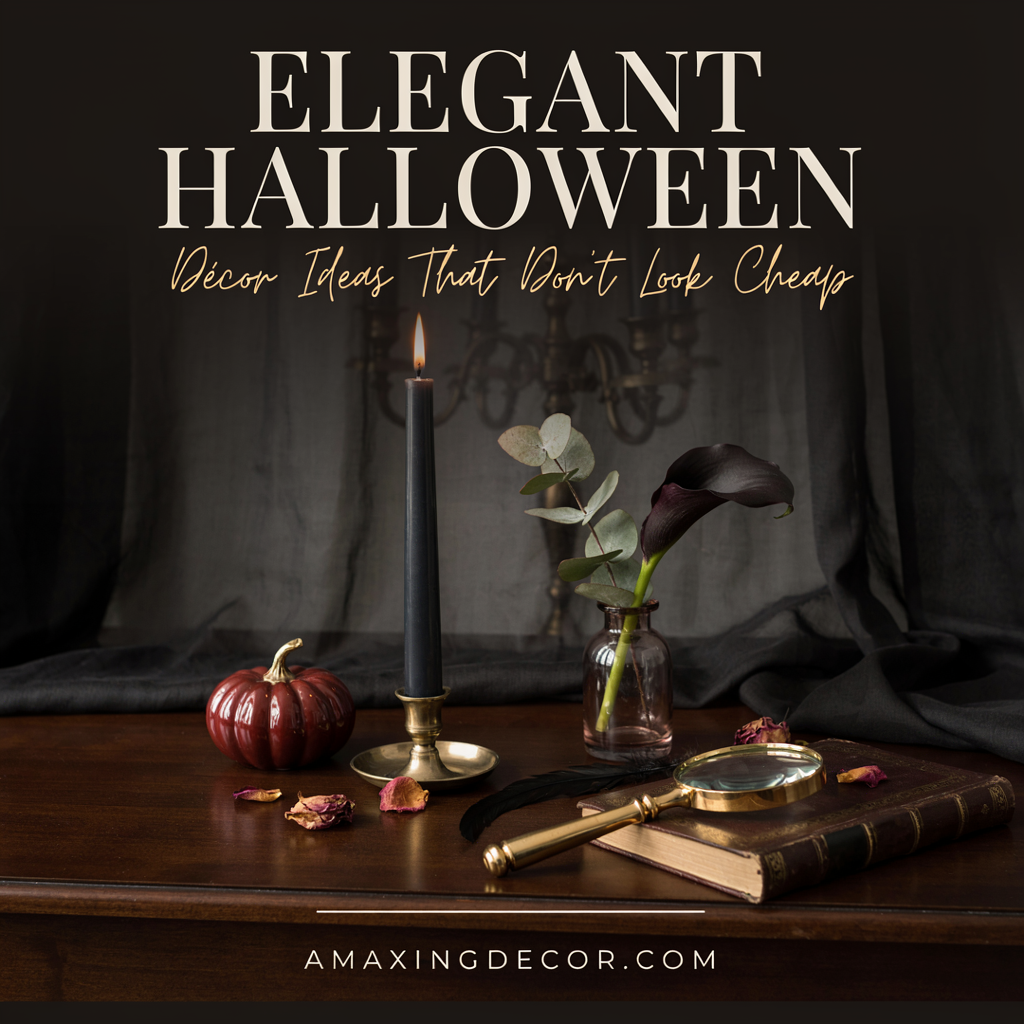
Halloween décor ideas can be atmospheric, creative and dramatic without making a home feel crowded or filled with novelty props. The difference usually comes down to restraint. Elegant Halloween décor uses a controlled palette, repeats a few materials and gives each decorative feature enough room to make an impact.
That does not mean everything must be black, minimalist or expensive. Pumpkins, bats, cobwebs and traditional Halloween references can all work in a refined interior when their scale, placement and finish suit the surrounding room. A collection of natural pumpkins, a dark floral arrangement and warm low-level lighting may create more atmosphere than several bags of unrelated plastic decorations.
The ideas below can be adapted to modern, traditional, rustic and maximalist homes. Most also sit naturally within a wider autumn scheme, so the house does not need to be completely redecorated for one evening.
Halloween Décor Ideas
What makes Halloween décor look elegant?
Sophisticated Halloween styling normally has four qualities: a clear colour story, consistent materials, intentional placement and a strong relationship with the room.
Instead of adding a Halloween item to every available surface, select one focal area in each space. This might be the front door, fireplace, dining table or console. Build one confident arrangement there, then use a few smaller echoes elsewhere.
Use the following principles as your foundation:
- Limit the palette to three or four main colours.
- Repeat finishes such as aged brass, matt black, dark wood or clear glass.
- Mix natural forms with only a few unmistakably Halloween details.
- Vary height and shape rather than filling a display with small objects.
- Choose decorations that suit the proportions and existing style of the room.
- Leave visible empty space so the display can be appreciated.
- Prefer items that can be reused throughout autumn or stored for future years.
Elegance is less about the price of an object than the discipline of the overall arrangement.
Choose a sophisticated Halloween colour palette
Black and orange remain classic, but their brightest versions can feel harsh when used equally throughout a room. Muted, deeper or warmer variations are easier to integrate with everyday interiors.
Black, cream and antique brass
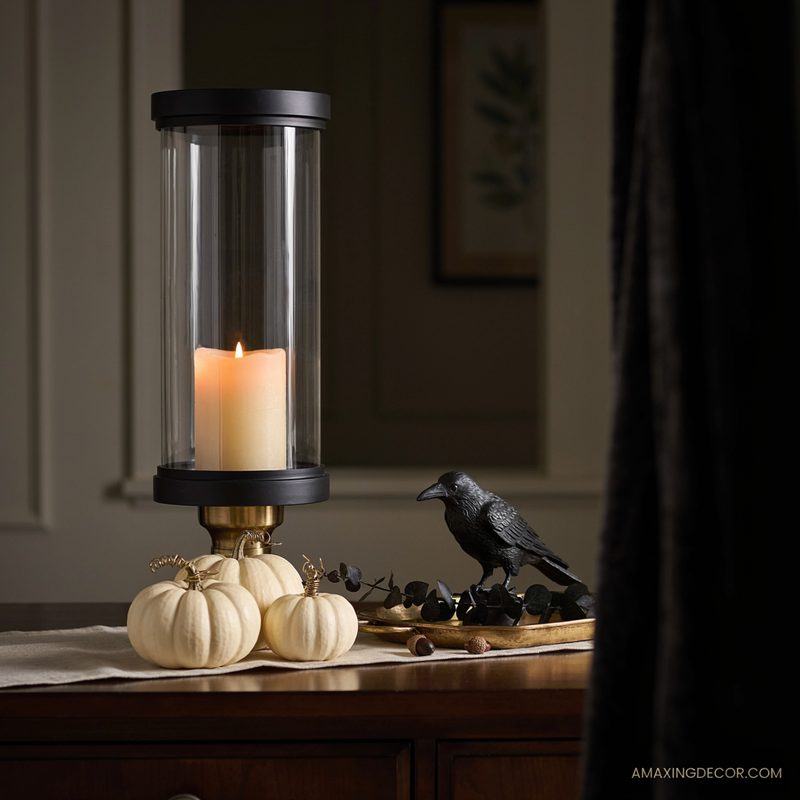
This palette is dramatic but balanced. Matt black creates definition, cream softens the contrast and aged brass reflects warm light. It works especially well in traditional and contemporary rooms.
Burgundy, plum and charcoal
Deep red and purple produce a gothic mood without relying on obvious novelty imagery. Add charcoal candles, dark flowers and small touches of silver or pewter.
Rust, olive and natural wood
For an earthy scheme, combine rust-coloured textiles, olive foliage and timber. Add only a few black accents to move the look from general autumn décor towards Halloween.
White, stone and smoky grey
A pale scheme can still feel seasonal. Use white pumpkins, grey glass, bare branches and faded foliage. Strong shadows and black line details provide enough contrast.
Black, copper and burnt orange
This version of the traditional Halloween palette feels richer because the orange is muted and the metal is warm. Use copper through candleholders, bowls or small decorative objects.
| Palette | Best suited to | Key materials |
|---|---|---|
| Black, cream and brass | Modern or traditional interiors | Velvet, ceramic, aged metal |
| Burgundy, plum and charcoal | Moody or gothic styling | Dark glass, flowers, candlelight |
| Rust, olive and wood | Rustic or natural homes | Linen, timber, foliage |
| White, stone and smoky grey | Minimalist or pale interiors | Matt ceramics, glass, branches |
| Black, copper and burnt orange | Warm contemporary rooms | Metal, pumpkins, dark wood |
1. Begin with an autumn foundation
The easiest way to avoid a cheap-looking Halloween display is to start with a seasonal base that would look attractive even without the Halloween details. Use pumpkins, foliage, branches, warm textiles, wood and lanterns first.
Then add a smaller layer of darker or more theatrical elements: black ribbon, a group of paper bats, a vintage-style crow or a few smoky glass vessels. Because the autumn foundation already belongs in the home, the final result feels integrated rather than temporary.
This also makes decorating more efficient. After Halloween, remove the bats and darker props while leaving the pumpkins, foliage and lanterns in place for the remainder of autumn.
2. Use pumpkins in a restrained palette
Natural pumpkins have enough shape and texture to carry a whole display. Rather than mixing every available colour, choose a family of tones such as cream and pale green, deep orange and burgundy, or white and charcoal.
Vary the scale and form. One large pumpkin with three smaller irregular shapes looks more natural than a row of identical pieces. Place them on a console, fireplace hearth or covered entrance without blocking heat sources, doors or walking routes.
If using decorative pumpkins, choose finishes that resemble ceramic, velvet, paper or matt-painted surfaces. A few convincing pieces generally look better than a large collection of shiny lightweight props.
3. Paint pumpkins in matt colours
Painting artificial or suitable decorative pumpkins can bring mismatched pieces into one scheme. Chalky black, warm white, mushroom, olive and deep burgundy are more forgiving than high-gloss finishes.
Use paint compatible with the material and follow product instructions, including drying and ventilation requirements. Apply thin coats and allow some variation rather than trying to make every pumpkin identical.
A small amount of antique gold or copper on the stem can connect the pumpkins with existing frames, lamps or candleholders. Keep metallic details subtle so they read as an accent rather than glitter.
4. Create an elegant front-door wreath
A Halloween wreath does not need cartoon ghosts or bright ribbon. Begin with a twig, grapevine or dark foliage base. Add dried seed heads, black berries, deep red leaves or one narrow velvet ribbon.
For a stronger Halloween reference, incorporate a single small crow, crescent moon or cluster of black feathers. Concentrating the decorative feature in one area of the wreath gives it a more designed appearance than distributing numerous small ornaments around the entire circle.
Secure the wreath using a suitable hook and choose weather-resistant materials for an exposed door.
5. Style a refined Halloween entrance
Frame the front door with two planters, lanterns or a grouped pumpkin display. Keep the path, step and house number clearly visible.
Black lanterns, cream pumpkins, dark green foliage and one deep rust wreath create a polished entrance that works during the day and evening. Battery-operated outdoor candles provide atmosphere without an exposed flame.
Avoid filling every step. Concentrate the main arrangement on one side of a narrow entrance or create balanced groups on either side of a wider doorway.
Internal link: Link this section to 21 Cosy Autumn Front Porch Ideas for a Welcoming Entrance using the anchor text autumn front porch ideas.
6. Make paper bats look intentional
Paper bats can appear sophisticated when used as a single flowing composition rather than scattered randomly across multiple walls. Arrange them so they rise diagonally from a fireplace, mirror or console towards an empty upper corner.
Use two or three sizes and keep the colour consistent. Matt black paper creates a clean silhouette, while dark brown or charcoal may suit a softer room. Test removable fixings in an inconspicuous area to avoid damage.
Leave nearby surfaces relatively simple. The bats should be the movement in the display, not one element among many competing decorations.
7. Use branches as sculptural decoration
Bare or sparsely leafed branches create height, shadow and natural drama. Arrange several in a substantial ceramic, glass or metal vessel, making sure the container is stable.
Leave the branches plain for a minimalist look, or add a few lightweight black leaves or small hanging ornaments. Do not overload them or position the arrangement where it may be knocked over.
Natural material must be clean, dry and collected responsibly. Keep dried branches away from candles, fires, heaters and hot light fittings.
8. Build a dark floral arrangement
Flowers in burgundy, plum, dried brown, cream and near-black tones can create a sophisticated centrepiece. Combine larger blooms with foliage and fine seed heads rather than using many small flower types.
Place the arrangement in smoked glass, aged brass or a dark ceramic vase. Artificial flowers can work if the colours and forms are convincing; reduce obvious plastic shine by choosing matt or fabric finishes.
For a dining table, keep the arrangement low enough for guests to see one another or move it to a sideboard during the meal.
9. Decorate the fireplace with asymmetry
An asymmetrical mantel arrangement feels natural and avoids the appearance of a shop display. Begin with a tall element on one side—such as branches, a framed print or substantial candlestick—then step down through smaller pumpkins and foliage.
Balance the opposite side with one low object rather than creating an exact mirror image. Repeat the same colours and materials so the two sides remain connected.
Keep all decorations a safe distance from flames, hot surfaces, vents and flues. If the fireplace is in use, follow its clearance and operating instructions and keep the hearth free of combustible décor.
10. Use antique-style frames and artwork
Changing artwork is an effective way to create a Halloween atmosphere without filling surfaces with ornaments. Botanical studies, dark landscapes, moon imagery, vintage portraits and abstract shadowy prints can all work.
Use images you own or have permission to reproduce. Place them in black, dark wood, pewter or antique-brass frames that can be reused throughout the year.
For a playful detail, add one small unusual portrait or silhouette within an existing gallery wall. Subtle changes reward closer inspection and can be more memorable than an obvious wall of themed signs.
11. Layer mirrors and smoky glass
Mirrors amplify low light and make small decorative arrangements feel more substantial. A mirror above a console can reflect branches, lanterns and dark flowers without requiring extra objects.
Smoky grey, amber and deep green glass bring translucent colour to shelves and tables. Use bottles, vases or candleholders in a small group, varying their height while keeping the tones related.
Avoid positioning mirrors where they reflect clutter or cause distracting glare. Glass vessels should be stable and kept away from table edges.
12. Create atmosphere with layered lighting
Lighting has more influence on Halloween mood than most decorations. Switch off harsh overhead lighting when practical and use table lamps, floor lamps and safe low-level decorative light instead.
Warm-white bulbs create a flattering glow, while amber light deepens rust, burgundy and brown. Dark or pleated lampshades can produce stronger pools of light and shadow, though they may not provide sufficient illumination for reading or safe movement.
Functional lighting is still important. Keep stairs, hallways and entrances clearly visible, especially when children or visitors are arriving after dark.
13. Use candles safely—or choose flameless alternatives
Tall taper candles and grouped pillar candles suit elegant Halloween styling, but open flames create risk around costumes, hair, dried foliage, paper decorations, pets and children.
Good-quality flameless candles with warm, gently flickering light can create a similar appearance. Place them inside lanterns or hurricane vessels and use a timer where available.
If real candles are used, follow fire-safety guidance, place them on stable non-combustible holders, keep them far from flammable materials and never leave them unattended. Do not place any flame where a costume or sleeve could pass over it.
14. Set an elegant Halloween dining table
Begin with a neutral or deep-coloured tablecloth and simple dinnerware. Add linen napkins, dark glassware and a low central arrangement. Matt black, cream and brass create a formal look; rust, olive and wood feel more relaxed.
Use small pumpkins, pears, dark grapes or decorative natural forms sparingly along the centre. Keep enough open space for serving dishes and comfortable place settings.
Name cards can carry the Halloween theme through typography or a black ribbon rather than novelty shapes. If children are attending, avoid small decorative pieces that may present a hazard.
15. Use black tableware as an accent
A few black pieces can transform an everyday dining arrangement. Try black side plates, candlesticks, napkin rings or one serving bowl rather than buying a completely themed set.
Black looks particularly refined beside warm white ceramics, clear glass and natural linen. A mixture of matt and lightly reflective finishes creates depth without becoming too severe.
Choose pieces that can also be used for other dinners. Versatile tableware helps the scheme feel collected rather than disposable.
16. Create a moody drinks or dessert station
A sideboard or bar trolley can become a contained Halloween focal point. Arrange dark glassware, one floral display, a framed print and labelled food or drinks together.
Use trays to group items and keep serving surfaces clean. For a non-alcoholic option, style sparkling water, dark fruit juices or warm spiced drinks in attractive bottles and jugs.
Food labels should remain clear and accurate, particularly where allergens are involved. Decorative bottles should never create confusion about what is safe to consume.
17. Add velvet and linen rather than novelty textiles
Textiles offer an easy seasonal update. Replace a few everyday cushions with velvet in burgundy, olive, rust or black. Add a linen or wool-look throw in a warm neutral.
Pattern can work, but it need not show pumpkins or skeletons. Subtle checks, stripes, damask or botanical motifs create atmosphere and remain useful after Halloween.
Limit textiles around dining areas, fireplaces and candles. In a bedroom, avoid adding so many decorative layers that the bed becomes inconvenient to use.
18. Style bookshelves with subtle Halloween details
Rather than clearing a whole bookcase, add a few details among existing books and objects. Turn a small selection of darker book spines outward, include one miniature pumpkin or dark ceramic piece and place a framed silhouette at the back.
Use odd-numbered groups and leave breathing room. A shelf with three strong objects is often more effective than one filled edge to edge.
Never stack books or heavy objects unstably. Keep decorations away from shelf lighting unless the products are designed to operate safely together.
19. Try a gothic botanical theme
A gothic botanical scheme combines dark flowers, pressed leaves, moth or insect illustrations, ferns, mushrooms and moon imagery. It feels recognisably Halloween without depending on mass-produced horror props.
Use framed prints, small glass domes, dark ceramics and natural specimens obtained responsibly. Avoid displaying real protected wildlife or collecting material unlawfully.
This theme works particularly well in a study, hallway or dining room. Keep the palette tight so the display feels like a curated collection rather than a science classroom.
20. Create a minimalist monochrome scheme
For a modern home, use only black, white and one warm material such as pale wood or brass. White pumpkins, black paper bats and simple black candleholders can create a clear Halloween identity.
Pay close attention to shape because colour variation is limited. Combine round pumpkins, tall candlesticks and fine branch silhouettes. Use fewer pieces and allow negative space to become part of the design.
Monochrome does not have to feel cold. Warm bulbs, natural linen and wood soften the black-and-white contrast.
21. Add one dramatic oversized element
One large object often appears more confident than numerous small decorations. Consider an oversized wreath, substantial branch arrangement, large framed print or group of pendant-like paper bats.
The feature should be proportionate to the room and securely installed. Leave surrounding areas simple so it remains the focal point.
Avoid oversized floor props in narrow halls or near stairs. Drama should not interfere with safe movement, doors or exits.
22. Decorate the staircase carefully
A staircase can carry a Halloween scheme through garland, ribbon or a controlled trail of paper shapes. Attach decorations to the outside of the balustrade rather than the handrail so people can still use it safely.
Keep treads, landings and the route at the top and bottom completely clear. Do not drape fabric or lighting where it can catch clothing or create a trip hazard.
A dark velvet ribbon and sparse faux foliage may be all that is needed. The strong diagonal line of the staircase already provides visual drama.
23. Give the bathroom a subtle seasonal touch
Halloween décor in a bathroom should remain minimal and moisture-resistant. Add a dark hand towel, small framed print, amber soap bottle or one ceramic pumpkin on a dry shelf.
Avoid electrical decorations not rated for bathroom conditions and keep objects away from wet edges. Decorative candles should not be placed around baths or towels.
Because the room is small, one or two changes will have greater impact than a full themed display.
24. Style a sophisticated Halloween bedroom
In the bedroom, focus on colour and texture rather than frightening imagery. Add burgundy or olive cushions, a charcoal throw, dark botanical art and warm bedside lighting.
One velvet pumpkin or small branch arrangement can provide the seasonal reference. Keep decorations away from bedding, heaters and bedside cables, and choose flameless light instead of candles.
Internal link: Link this section to 25 Cosy Bedroom Ideas for Autumn and Winter using the anchor text cosy bedroom ideas.
The result should still feel restful. Halloween can influence the palette without making the room look like a party venue.
25. Use reusable decorations and edit every display
Investing in a small collection of durable decorations usually produces a more refined result than purchasing a new bag of disposable pieces every year. Neutral lanterns, dark vases, brass candleholders, fabric pumpkins and a twig wreath base can be restyled repeatedly.
After arranging a room, remove one or two of the least important objects. This final editing stage often turns a crowded display into an elegant one.
Store reusable pieces clean, dry and clearly labelled. Protect delicate finishes so they still look good the following year.
Elegant Halloween décor by room
Living room
Focus on the fireplace, coffee table or main console. Use one dark floral arrangement, a group of pumpkins and layered lighting. Repeat a single colour through cushions or a throw.
Dining room
Give priority to the table. Linen, dark glass, simple crockery and a low centrepiece are sufficient. Keep serving space and sightlines clear.
Hallway
Style the entrance console with a mirror, branches and flameless lantern. Do not narrow the route or hide keys, alarms, switches or the front door.
Kitchen
Decorate one shelf, windowsill or island tray. Keep worktops, the hob and food-preparation areas clear. Natural pumpkins and a dark ceramic vase are often enough.
Bedroom
Change cushions, throw and artwork rather than introducing numerous ornaments. Maintain a calm atmosphere and remove anything that interferes with sleep or daily routines.
Bathroom
Use one dark textile and one dry-surface accent. Moisture, heat and electrical restrictions make restraint particularly important.
Front entrance
Choose outdoor-safe materials, weighted lanterns and secure fixings. Preserve a clear walking route, visible house number and functional lighting.
How to make affordable Halloween décor look expensive
An elegant result depends more on selection and styling than a large budget.
- Choose one colour palette before buying anything.
- Use existing vases, frames, books, trays and lanterns.
- Paint mismatched decorative pumpkins in related matt colours.
- Create paper bats from one consistent template and colour.
- Collect suitable branches responsibly and arrange them in a stable vase.
- Replace plastic ribbon with a small amount of velvet or natural fibre.
- Group decorations on trays rather than scattering them across the room.
- Concentrate spending on one visible focal point.
- Use warm lighting to improve the atmosphere of the whole scheme.
- Remove excess objects after styling.
Avoid copying luxury displays item for item. Translate the underlying idea scale, repetition, colour or texture – using materials that suit your home and budget.
Elegant Halloween ideas without orange
Orange is optional. A recognisable Halloween scheme can be created through shape, shadow and darker colour.
Try one of these combinations:
- Black pumpkins, cream candles and brass frames
- Burgundy flowers, charcoal linen and smoked glass
- White pumpkins, bare branches and pewter details
- Olive foliage, dark wood and black paper bats
- Plum velvet, antique silver and moon imagery
If the result feels too dark, introduce warm white through walls, ceramics, table linen or lampshades rather than adding another accent colour.
Elegant outdoor Halloween décor
Outdoor styling must withstand wind and rain while keeping the property safe and accessible. Use substantial planters, weighted lanterns, firmly secured wreaths and decorations specifically suitable for exterior use.
Do not run cables across paths or use indoor electrical products outside. Keep steps clear, make the house number visible and ensure functional entrance lighting remains bright enough for visitors.
Natural pumpkins may soften or rot in wet conditions. Inspect them regularly and remove them before they stain paving or attract pests. Store textiles and delicate props indoors during poor weather.
Halloween party styling without visual clutter
For a gathering, decorate the areas guests will actually use: the entrance, drinks station, dining table and one seating area. There is little benefit in decorating every corner if the main spaces feel cramped.
Use consistent labels, napkins and serving pieces to connect the scheme. Keep food information accurate and provide sufficient light for guests to move safely and identify what they are eating.
Costumes may include loose fabric, wigs and masks that limit visibility. Flameless lighting is especially sensible at a Halloween party, and floors, stairs and exits should remain completely unobstructed.
Common mistakes that make Halloween décor look cheap
Mixing too many themes
Gothic romance, cartoon ghosts, farmhouse pumpkins and horror props can compete when used together. Select one primary direction and allow only small secondary influences.
Using every decoration you own
Storage history should not determine the final display. Choose the pieces that suit this year’s palette and leave the rest packed away.
Spreading small objects everywhere
Numerous tiny decorations create visual noise. Group items into stronger arrangements and leave other surfaces clear.
Depending on bright overhead light
Harsh light exposes every material and removes atmosphere. Use layered warm lighting while preserving enough illumination for safety.
Buying only obviously themed products
Vases, linen, frames and lanterns can establish most of the scheme. Halloween-specific pieces should provide the final layer, not every layer.
Ignoring scale
Tiny decorations disappear on a large mantel, while an oversized arrangement can overwhelm a narrow console. Match the scale of the objects to the available surface.
Using unsafe candles or electrical decorations
An attractive display is not worth a fire, electrical or trip risk. Use outdoor-rated products where required, choose flameless candles and keep exits and walkways clear.
Final thoughts
Elegant Halloween décor is created through control rather than excess. Start with an autumn foundation, choose a refined palette and build one strong focal arrangement in each important space. Natural pumpkins, branches, dark flowers, warm lighting and a few recognisable Halloween details can create all the atmosphere you need.
Work with the existing character of your home. A traditional room may suit burgundy flowers and aged brass, while a modern interior may need only white pumpkins, black silhouettes and sculptural branches. The result should feel like your home in late October—not a temporary shop display.
Once Halloween has passed, remove the darker themed details and allow the pumpkins, foliage, textiles and lanterns to carry the scheme through the rest of autumn.
For more seasonal colour palettes and room-by-room inspiration, explore The Complete Autumn Home Décor Guide.
Frequently asked questions
How can I make Halloween decorations look elegant?
Choose a limited palette, repeat the same materials and concentrate decorations into a few strong arrangements. Begin with timeless autumn elements such as pumpkins, foliage, wood and lanterns, then add black or gothic details sparingly. Warm lighting and empty space around each display will make the scheme feel more refined.
What colours create a classy Halloween look?
Black, cream, burgundy, plum, charcoal, olive, rust, copper and antique brass all work well. Select three or four colours that complement the room. Muted or deep shades generally integrate more easily than very bright orange, purple and green used together.
How do I decorate for Halloween without making my home scary?
Use seasonal materials and atmospheric colour rather than horror imagery. Pumpkins, bare branches, dark florals, moon prints and warm lantern light suggest Halloween without frightening decorations. This approach is particularly suitable for family homes and calm interiors.
Can Halloween décor work in a neutral home?
Yes. Retain the cream, beige or grey foundation and add matt black details, white pumpkins, smoky glass and branches. One deeper accent such as burgundy or olive will add warmth while preserving the neutral character.
How can I decorate elegantly for Halloween on a budget?
Restyle objects you already own, including dark books, vases, frames, trays and lanterns. Paint reusable pumpkins, make a controlled paper-bat display and use safely collected branches. Spend on one visible feature rather than many small decorations.
What can I use instead of plastic Halloween decorations?
Consider paper silhouettes, fabric pumpkins, ceramic pieces, natural pumpkins, responsibly gathered branches, dried flowers, reusable metal lanterns and framed artwork. Select materials according to where they will be used and keep combustible items away from heat and flames.
How can I decorate a small room for Halloween?
Use the walls and one main surface. A wreath, framed print or flowing group of paper bats takes up no floor space. Style one tray on a console or chest rather than placing ornaments throughout the room. Keep walkways and storage access clear.
How do I style an elegant Halloween table?
Begin with a plain tablecloth or runner, simple crockery and linen napkins. Add dark glass, metal candleholders and a low floral or pumpkin arrangement. Leave sufficient room for place settings and serving dishes, and prefer flameless candles around guests and textiles.
How early should I decorate for Halloween?
Build the autumn foundation in September or early October, then add unmistakably Halloween details during October. This staggered approach lets the décor evolve and makes it easy to remove bats, dark props and themed artwork after 31 October while retaining the broader autumn scheme.
How can Halloween décor transition back into autumn décor?
Use pumpkins, foliage, lanterns, warm textiles and natural wood as the foundation. After Halloween, remove black silhouettes, gothic artwork and overtly themed accessories. Rust, olive, cream and warm brown can remain until winter decorating begins.