



Autumn is one of the most useful times to work in the garden. The pace of growth begins to slow, fallen leaves reveal the structure of beds and borders, and cooler conditions make many maintenance jobs more comfortable. A few carefully chosen tasks now can protect plants, reduce winter damage and give the garden a stronger start in spring.
That does not mean every leaf must be removed or every faded plant cut to the ground. A good autumn garden checklist balances tidiness with wildlife value. Paths, lawns and drains may need clearing, while leaves beneath hedges and healthy seed heads in borders can provide shelter and food.
The exact timing will vary across the UK. Gardens in northern Scotland may experience frost and strong winds earlier than sheltered areas in southern England. Use the condition of your garden and the local forecast as your guide rather than treating calendar dates as firm deadlines.
Autumn Garden Checklist
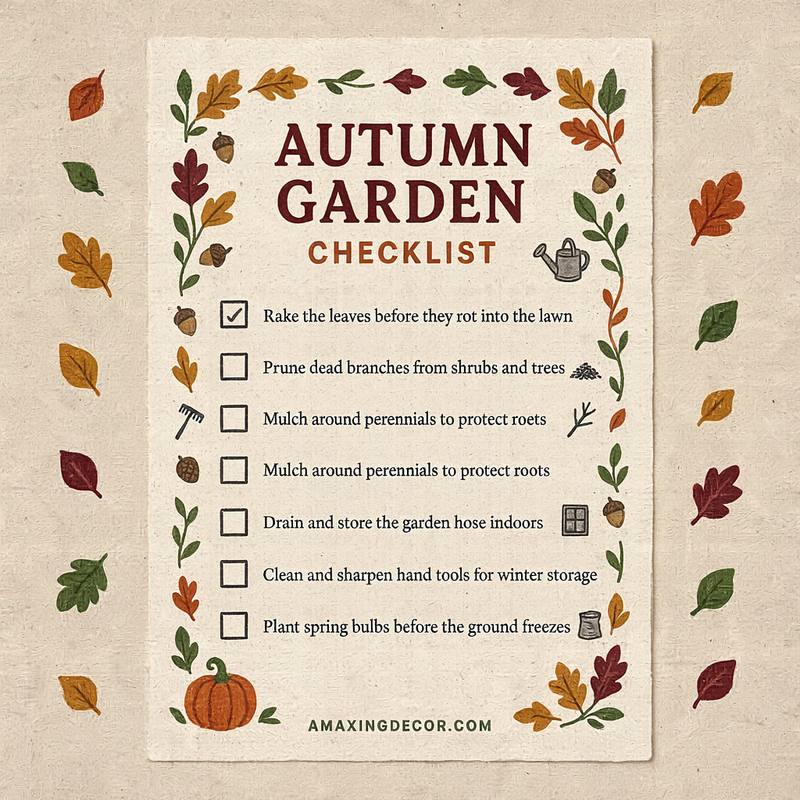
Quick autumn garden checklist
Use this summary to identify the most important jobs, then continue through the guide for practical details.
- Clear wet leaves from paths, steps, lawns and drains.
- Make leaf mould or add suitable leaves to the compost heap.
- Give the lawn its final seasonal care without cutting it too short.
- Remove diseased plant material and dispose of it appropriately.
- Leave useful seed heads and some hollow stems for wildlife.
- Divide suitable congested perennials when conditions allow.
- Plant spring-flowering bulbs at the appropriate depth and time.
- Lift or protect tender plants before damaging frost.
- Raise containers and check that drainage holes are open.
- Move vulnerable pots to a sheltered position.
- Harvest remaining vegetables and clear unhealthy crop debris.
- Sow or plant suitable overwintering crops if conditions permit.
- Insulate exposed taps and drain unused watering equipment.
- Clean, dry and store tools and garden furniture.
- Check fences, trellis, sheds and greenhouse panels before storms.
- Clean bird feeders and provide fresh water.
- Create or preserve undisturbed wildlife shelter.
- Review what worked and make notes for spring.
1. Observe the garden before starting
Before reaching for secateurs or a rake, walk slowly around the whole garden. Look for plants leaning over paths, containers collecting water, damaged fence panels, blocked gutters and areas where fallen leaves are becoming slippery.
Take a few photographs. Autumn exposes the garden’s underlying shape, making it easier to see where an evergreen, small tree, structural grass or improved path could help. Photographs also provide a useful record when planning spring planting.
Divide your jobs into three groups:
- Urgent: storm damage, blocked drains, hazardous paths and tender plants at risk from frost.
- Seasonal: bulb planting, lawn care, leaf collection and dividing suitable perennials.
- Optional: cosmetic tidying, repainting and redesign projects that can wait.
This prevents a long checklist from becoming overwhelming and keeps safety-sensitive tasks at the top.
2. Clear leaves from paths, steps and lawns
Wet leaves can make hard surfaces slippery and may smother grass if left in a thick layer. Sweep or rake them regularly from steps, paths, patios, decking, lawns and entrances.
You do not need to remove every leaf from the property. Leaves resting beneath hedges or in quiet border areas can provide habitat and gradually return organic matter to the soil. The aim is to move them away from places where they create a hazard or damage plants, not to make the garden unnaturally bare.
Avoid piling leaves against the base of buildings, timber structures or vulnerable plant crowns. In windy gardens, collect small amounts regularly rather than waiting until the end of the season.
3. Turn fallen leaves into leaf mould
Healthy deciduous leaves can become a useful soil conditioner. Gather them when damp and store them in a ventilated leaf sack, simple wire enclosure or dedicated leaf-mould container. They break down more slowly than ordinary compost, but the finished material can improve soil texture and help retain moisture.
Shredding or mowing over larger leaves first can help them decompose more quickly. Do not include litter or obviously diseased material. Avoid collecting leaves from places where contamination may be a concern, such as heavily trafficked roadsides.
Some leaves are slower to break down than others, so patience is part of the process. Label the container with the year and allow nature to do most of the work.
4. Review the compost heap
Autumn supplies plenty of compostable material, but a heap filled only with wet leaves and soft green waste may become compacted. Mix wetter material with drier, more fibrous ingredients such as torn plain cardboard, small amounts of woody prunings or dry stems.
Cut bulky material into smaller pieces and avoid adding perennial weed roots, mature weed seeds or diseased plants unless your composting system reliably deals with them. Never add cooked food, meat or dairy to a basic garden heap.
If the heap is exposed to heavy rain, a cover can prevent it from becoming waterlogged while still allowing airflow. Finished compost can be spread as mulch where appropriate or stored for use later.
5. Give the lawn its final seasonal care
Grass may continue growing during mild autumn weather, so the final mow is determined by conditions rather than a particular date. Raise the mower blades and avoid cutting the lawn extremely short. Longer grass is generally better able to cope with cold and wet conditions than closely scalped turf.
Remove thick leaf cover and keep lawn edges clear. If the ground is saturated or frozen, stay off it where possible; heavy traffic can compact wet soil and damage brittle, frosted grass.
Autumn can be a suitable time for scarifying, aerating and repairing worn patches, but only when the lawn and weather conditions are appropriate. Avoid aggressive treatment if the grass is already stressed, waterlogged or likely to face immediate frost.
6. Tidy borders selectively
It can be tempting to cut every perennial down as soon as it fades. A selective approach usually produces a healthier and more wildlife-friendly garden.
Remove collapsing foliage that is slimy, diseased or smothering smaller plants. Cut back stems that are blocking paths or likely to fall across delicate neighbours. Leave healthy seed heads, ornamental grasses and sturdy hollow stems where they add winter structure or provide food and shelter.
Plants differ in how and when they should be cut back. If you are uncertain about a particular species, identify it before pruning. A plant database, nursery label or reputable local gardening source is more reliable than applying one rule across the whole border.
7. Remove diseased plant material
Autumn is a good time to reduce sources of infection, but diseased material should be handled separately from ordinary garden waste. Remove affected leaves, fruit and stems using clean tools. Follow local guidance for disposal rather than automatically placing everything on the home compost heap.
Clean secateurs between affected plants, especially where disease could be spread on the blades. Remove fallen fruit that is rotten or diseased, but leave some healthy natural material in less formal parts of the garden when it benefits wildlife and does not create another problem.
Do not confuse ordinary seasonal dieback with disease. Many herbaceous plants naturally yellow and collapse as they enter dormancy.
8. Mulch beds and borders
Mulching can protect the soil surface, suppress some weeds and add organic matter. Apply well-rotted compost, leaf mould or another appropriate material to moist, weed-free soil.
Keep mulch away from the crowns of herbaceous plants and do not heap it directly against tree trunks, shrub stems or walls. A thick mound around a stem can trap moisture and encourage problems rather than offering protection.
If the soil is frozen or waterlogged, delay the job. The best material and depth will depend on the plants and soil, so avoid treating every part of the garden identically.
9. Divide suitable overcrowded perennials
Some established perennials benefit from division when clumps become congested, flowering declines or the centre begins to die out. Autumn can be suitable for many spring- and early-summer-flowering plants while the soil remains workable and not excessively wet.
Lift the plant carefully, separate healthy sections and replant them promptly at the original depth. Water them in and avoid dividing plants during drought, waterlogging, hard frost or unsuitable periods for that species.
Not every perennial should be divided in autumn. Check the needs of the exact plant first, particularly with borderline-hardy or autumn-flowering varieties.
10. Plant spring-flowering bulbs
Planting bulbs is one of the most rewarding autumn jobs because it creates colour for the following spring. Daffodils, crocuses, alliums and other spring-flowering bulbs can be placed in borders, containers or naturalised areas according to their individual requirements.
Choose firm, healthy bulbs and follow the supplier’s planting depth, spacing and timing instructions. Position them in free-draining soil with the growing point upwards. If drainage is poor, containers or raised areas may be more successful than persistently wet ground.
Tulips are often planted later than many other spring bulbs, but timing still depends on location and conditions. Label groups after planting so they are not accidentally disturbed during winter work.
11. Protect tender plants before frost
Tender plants should be identified before the first damaging frost rather than after foliage has blackened. Depending on the plant, protection may involve moving a container into a frost-free space, lifting and storing tender parts, wrapping a pot or applying a dry protective mulch.
Horticultural fleece can provide temporary protection when correctly used, but it should be secured without crushing the plant and checked after severe weather. Bubble wrap may help insulate the outside of a container, but avoid wrapping living top growth in non-breathable plastic.
Protection needs vary widely. Find out the plant’s hardiness and consider the local microclimate—an exposed Dundee garden, for example, may need earlier preparation than a sheltered urban courtyard farther south.
12. Prepare containers for cold and wet weather
Container plants are more exposed to temperature changes than plants in the ground. Check that drainage holes are clear and raise pots on feet where suitable so excess water can escape.
Group vulnerable containers near a sheltered wall, but do not block air bricks, doors, paths or access points. Heavy pots should be moved using safe lifting techniques or suitable equipment; do not risk injury for the sake of repositioning a planter.
Terracotta can crack when saturated compost freezes. Frost-resistant containers, good drainage and appropriate insulation can reduce the risk, though no method guarantees protection in severe conditions.
13. Refresh autumn and winter pots
Remove exhausted summer annuals and replace them with plants suited to the season and position. Evergreens, heuchera, cyclamen sold for outdoor use, violas, small grasses and structural shrubs can provide colour and texture, depending on local conditions.
Avoid overfilling the container. Plants grow more slowly in autumn, but roots still need healthy compost, drainage and air. Combine one structural plant with a lower flowering or foliage layer rather than using too many varieties.
Containers near the entrance can also connect the garden with your seasonal porch styling.
14. Harvest remaining fruit and vegetables
Continue picking crops while they are in usable condition. Harvest tender produce before frost where appropriate and inspect stored fruit or vegetables regularly so one damaged item does not affect the rest.
Remove clearly diseased crop material and deal with it according to the problem involved. Healthy, soft green material can usually be composted. Clean labels, supports and reusable pots before storing them.
Do not leave damaged netting loose over empty beds, as wildlife can become entangled. Store it neatly or keep it correctly tensioned if it remains in use.
15. Prepare vegetable beds for winter
Once crops are cleared, remove problem weeds and cover bare soil where appropriate. A layer of well-rotted organic matter can protect and improve many beds. Alternatively, suitable green manures or a secure cover may reduce erosion and weed growth.
The best approach depends on soil type. Heavy soil may benefit from winter weather breaking down exposed clods after rough digging, while repeated digging is unnecessary in a no-dig system. Avoid working saturated soil, as this can damage its structure.
Keep a record of where crops grew to help plan rotation next season. This is also a useful time to note varieties that performed well or poorly.
16. Plant garlic, onions or broad beans where suitable
Some garlic, onion sets and broad-bean varieties are intended for autumn planting. Choose products labelled for the purpose and follow the supplier’s instructions for timing, spacing and soil conditions.
Autumn sowing is not suitable for every garden. Cold, exposed or waterlogged plots may give better results with spring planting. Protect new sowings from pests where necessary using wildlife-safe methods and inspect them after prolonged wet weather.
Good drainage is particularly important. If the bed remains saturated, wait or use another growing method rather than planting simply because it appears on a seasonal checklist.
17. Care for trees and shrubs
Check trees and shrubs for broken, dead or crossing branches. Small, straightforward work may be manageable with clean tools, but large branches, work at height and trees near buildings or services should be assessed by a suitably qualified professional.
Autumn is not the correct pruning time for every species. Some plants may bleed sap, lose flowers or become more vulnerable if pruned at the wrong point in the year. Identify the plant and check species-specific guidance before making major cuts.
Newly planted trees may need their ties and stakes inspected. A tie should support the tree without cutting into the bark. Adjust or replace it if necessary and remove a stake when it is no longer required.
18. Check climbers and wall plants
Strong winds can pull loose climbers away from supports. Inspect wires, trellis and ties, replacing anything damaged. Ties should be secure but not tight enough to constrict growth.
Trim growth that is obstructing gutters, windows, doors, paths or exterior lights, provided the plant is suitable for pruning at that time. Do not allow ladders or high-level work to turn a routine garden task into a safety risk; use professional help where access is difficult.
Check supporting structures as well as the plant. Rotten timber or corroded fixings may fail during winter weather.
19. Prepare ponds and water features
Remove excessive fallen leaves from small ponds before they decay in the water, but work carefully to avoid harming wildlife. A temporary pond net may reduce leaf fall if it is fitted securely and checked so animals cannot become trapped.
Do not make drastic changes to an established wildlife pond immediately before winter. Leave some vegetation and undisturbed areas. Pumps and filters should be maintained according to their manufacturer’s guidance, as requirements differ between wildlife ponds and ornamental systems containing fish.
Empty and store small decorative water features if freezing could damage them. Never work with electrical pond equipment while it is connected to the power supply.
20. Support garden wildlife
A winter-ready garden should not be perfectly stripped and sterile. Leave some healthy seed heads for birds, retain leaf litter beneath hedges and preserve a quiet pile of logs or twigs where it can remain undisturbed.
Clean bird feeders and bird baths regularly, provide fresh water and remove mouldy food. Position feeders where birds can see approaching danger and where spilled food will not create unnecessary problems.
Check bonfire material carefully before lighting, as hedgehogs and other animals may shelter inside. The safest approach is to rebuild the pile shortly before use and follow local fire rules. Never burn treated timber, plastics or unsuitable garden waste.
21. Clean paths, patios and decking
Sweep leaves and debris from hard surfaces before they become slippery. Pay particular attention to shaded areas, steps and routes used after dark.
Use the least aggressive cleaning method suitable for the surface. Excessive pressure washing can damage pointing, timber and some paving finishes. If a cleaning product is required, check that it is appropriate for the material and follow all safety, drainage and environmental instructions.
Inspect loose slabs, damaged step edges and unstable handrails. Repairs may be more important than cosmetic cleaning before winter.
22. Clear gutters and drains
Blocked gutters and surface drains can cause overflowing water, slippery paths and damage around buildings. Remove leaves where the area is safely accessible from ground level.
Do not work at height without suitable equipment and competence. If the gutters are high, difficult to reach or near electrical hazards, arrange professional help.
Make sure garden drainage channels remain clear and that water is not being directed towards foundations or neighbouring property. Address recurring standing water rather than assuming it is only an autumn inconvenience.
23. Protect outdoor taps and watering equipment
Disconnect hosepipes, empty watering attachments and store equipment that could be damaged by freezing. Insulate exposed outdoor taps with a purpose-made cover where appropriate.
Drain irrigation systems according to their manufacturer’s instructions. Check water butts, diverters and overflow routes so heavy rainfall can be handled safely. A water butt should stand on a stable base and have a secure lid.
Continue checking container plants during dry spells. Autumn rain does not always reach pots positioned beneath roof overhangs or against walls.
24. Inspect fences, gates and garden structures
Loose fence panels, gate latches and trellis become more vulnerable during winter storms. Tighten accessible fixings, replace minor damaged parts and arrange repairs for unstable structures.
Check pergolas, arches, sheds and covered seating areas for obvious decay, loose roofing material or blocked drainage. Structural repairs and work at height should be handled by someone with the right skills and equipment.
Do not attach heavy seasonal decorations to a structure unless it is capable of supporting them in wet and windy conditions.
25. Clean the greenhouse
Remove dead plants, fallen leaves and unused pots from the greenhouse. Clean staging, panes and accessible surfaces so winter light can reach overwintering plants. Use products suitable for horticultural environments and follow label directions.
Inspect glazing clips, vents and doors before stormy weather. Replace broken panes safely and keep sharp glass away from children, pets and wildlife. Improve airflow on mild days while protecting plants from damaging cold.
If heating is used, check the equipment well before it is needed. Electrical appliances must be suitable for the environment and used according to the manufacturer’s instructions.
26. Clean and store garden tools
Remove soil and plant residue from hand tools, dry them thoroughly and inspect them for damage. Sharpening and oiling requirements depend on the tool, so follow the manufacturer’s care information.
Clean cutting blades after working with diseased plants. Store tools in a dry, secure place rather than leaving them outdoors where handles, blades and mechanisms may deteriorate.
Drain fuel or batteries from seasonal power equipment only in accordance with the manual. Never improvise maintenance on machinery, and arrange qualified servicing if a fault is suspected.
27. Store or secure garden furniture
Clean furniture before storing it or fitting a breathable, correctly sized cover. Allow every piece to dry first; covering damp furniture can trap moisture.
Lightweight chairs, tables and parasols should be stored or secured before strong winds. Fold and store parasols even when they are designed for outdoor use. Remove cushions and other absorbent textiles to a dry indoor space.
Different materials need different care. Timber, metal, woven resin and natural rattan should be maintained according to their construction and finish.
28. Review garden lighting
Shorter days make functional outdoor lighting more important. Clean accessible fittings, check timers and replace failed lamps with the correct type. Make sure routes, steps and entrances are visible without creating excessive glare.
Only use lights, extension equipment and connections specifically rated for outdoor use. Electrical faults, damaged cables and fixed wiring should be dealt with by a competent electrician.
Solar lights may provide decoration, but reduced winter sunlight can limit their performance. Do not rely on them as the only safety lighting for steps or entrance paths.
29. Weed selectively before winter
Remove persistent weeds before they establish deeper roots or set seed. Work when the soil is moist but not saturated, taking care not to disturb neighbouring plant roots unnecessarily.
Small annual weeds may be compostable before seeding, while invasive roots and seed heads need more careful disposal. Follow local rules and never dump garden waste in the countryside.
Mulching after weeding can reduce exposed soil, but it is not a substitute for dealing with established perennial weeds properly.
30. Make notes for next year
Autumn is the ideal time to record which parts of the garden performed well. Note plants that outgrew their positions, empty periods in the borders, vegetables that produced a worthwhile crop and containers that required too much watering.
Sketch possible changes and take photographs from the same viewpoints. Make a short spring shopping list, but resist buying plants before confirming that the position, soil and conditions are suitable.
These notes turn routine maintenance into long-term garden improvement.
Month-by-month autumn garden jobs in the UK
Seasonal boundaries shift with location and weather, but this framework can help organise the workload.
September garden jobs
- Continue harvesting fruit and vegetables.
- Collect seed from suitable healthy plants.
- Begin planting spring-flowering bulbs according to supplier instructions.
- Repair worn lawn areas when conditions are suitable.
- Divide suitable perennials.
- Bring especially tender plants under cover if early cold is forecast.
- Review containers and replace exhausted summer displays.
October garden jobs
- Collect leaves from lawns, paths and drains.
- Make leaf mould and balance the compost heap.
- Move vulnerable pots into sheltered positions.
- Plant suitable trees, shrubs or perennials while soil conditions allow.
- Check ties, supports, fences and greenhouse panels.
- Clear unhealthy vegetable-crop debris.
- Reduce mowing frequency as growth slows.
November garden jobs
- Continue clearing slippery leaf build-up.
- Protect taps and drain unused watering equipment.
- Store furniture, cushions and lightweight accessories.
- Check winter protection after wind and rain.
- Clean and store tools.
- Make sure bird feeders and water sources are clean.
- Avoid walking on frozen lawns and working waterlogged soil.
In colder areas, several October or November tasks may need to happen earlier. In a mild autumn, grass and some plants may continue growing well beyond the usual expectations.
What not to do in the autumn garden
Do not cut everything down
Healthy stems and seed heads can offer winter interest, shelter and food. Remove material selectively rather than clearing every bed to bare soil.
Do not prune every shrub
Incorrect autumn pruning can remove flower buds or expose plants to damage. Check the needs of the specific species.
Do not work saturated soil
Digging or repeatedly walking over waterlogged ground can compact it and damage its structure. Wait for better conditions.
Do not leave hazards until spring
Loose paving, broken branches, unstable fences and blocked drains can become worse during winter. Address or professionally assess them before severe weather.
Do not assume all pots need no water
Containers in sheltered positions may remain dry even during wet weather. Check the compost rather than watering—or withholding water—automatically.
A wildlife-friendly approach to autumn tidying
The garden does not have to choose between being cared for and supporting wildlife. Think in zones. Keep entrances, paths, lawns and working areas tidy, but leave quieter border edges and spaces beneath hedges less disturbed.
A balanced autumn garden might include:
- Clear and safe paths
- A leaf-mould container for excess leaves
- Some leaf litter beneath hedges
- Healthy seed heads retained in borders
- A stable log or twig pile in a quiet position
- Clean bird feeders and fresh water
- No loose or dangerous netting
- Outdoor lighting limited to where it is needed
This approach preserves a sense of order while recognising that fallen leaves, stems and seeds are part of the garden’s seasonal cycle.
Final thoughts
An effective autumn garden checklist is not about completing every possible job. It is about deciding what will protect plants, improve safety and make winter easier.
Start with wet paths, blocked drains, vulnerable plants and unstable structures. Then move to seasonal tasks such as gathering leaves, caring for the lawn, planting bulbs and preparing containers. Leave useful seed heads and some sheltered natural material for wildlife rather than clearing the garden completely.
Work with the weather and conditions in your own garden. When frost or prolonged rain arrives earlier than expected, adjust the order. A thoughtful few weekends in autumn can prevent avoidable damage and leave the garden ready to wake up again in spring.
For seasonal colours and ideas that connect your outdoor entrance with the rooms inside, explore our complete autumn home décor guide.
Frequently asked questions
When should I start preparing my garden for winter?
Begin during early autumn by observing weather changes, harvesting crops and planning frost protection. More intensive leaf clearing, tool storage and structure checks can follow as growth slows. In colder or exposed parts of the UK, complete vulnerable-plant protection earlier than you would in a sheltered southern garden.
Should I cut back all perennials in autumn?
No. Remove diseased, slimy or hazardous growth, but consider leaving healthy seed heads, ornamental grasses and sturdy stems for winter structure and wildlife. Some plants are also better cut back in spring. Identify each plant before applying a general rule.
Should fallen leaves be removed from flower beds?
A light layer beneath shrubs and hedges can provide shelter and gradually break down. Remove thick, compacted mats that smother small plants, trap excessive moisture around vulnerable crowns or contain diseased material. Always clear leaves from paths, steps, lawns and drains where they can cause problems.
What should I do with autumn leaves?
Use healthy deciduous leaves to make leaf mould, add suitable amounts to a balanced compost heap or retain some in undisturbed garden areas. Shredding larger leaves may speed decomposition. Keep diseased or potentially contaminated material separate and dispose of it appropriately.
What should I plant in the garden during autumn?
Depending on conditions, autumn may suit spring-flowering bulbs, certain trees, shrubs, perennials, garlic, onion sets and specific broad-bean varieties. Always check the requirements of the exact plant or product. Avoid planting into frozen or waterlogged soil.
How do I protect container plants from frost?
Identify which plants are vulnerable, move pots to a sheltered or frost-free position where necessary and ensure excellent drainage. Raise suitable containers on pot feet and insulate them with appropriate materials. Protection methods vary, so check species-specific advice.
Should I mow the lawn in autumn?
Yes, while grass is still growing and conditions are dry enough, but mow less frequently and raise the cutting height. Avoid mowing frozen, saturated or very soft ground. Remove heavy leaf cover so it does not smother the lawn.
Is autumn a good time to mulch?
It can be, especially when the soil is moist but not frozen or waterlogged. Remove weeds first and apply suitable well-rotted organic material without piling it against stems, trunks or plant crowns. The appropriate mulch and depth depend on the planting and soil.
How can I prepare my garden for winter wildlife?
Retain some healthy seed heads, leaves beneath hedges and undisturbed woody material. Keep bird feeders and water containers clean, remove dangerous loose netting and check bonfire piles carefully. Preserve shelter while keeping essential paths and working areas safe.
What are the most important autumn garden jobs if I have limited time?
Prioritise clearing slippery paths and blocked drains, protecting tender plants, securing loose structures, checking containers and storing vulnerable equipment. After those jobs, collect lawn leaves, plant bulbs and clean tools as time allows.