


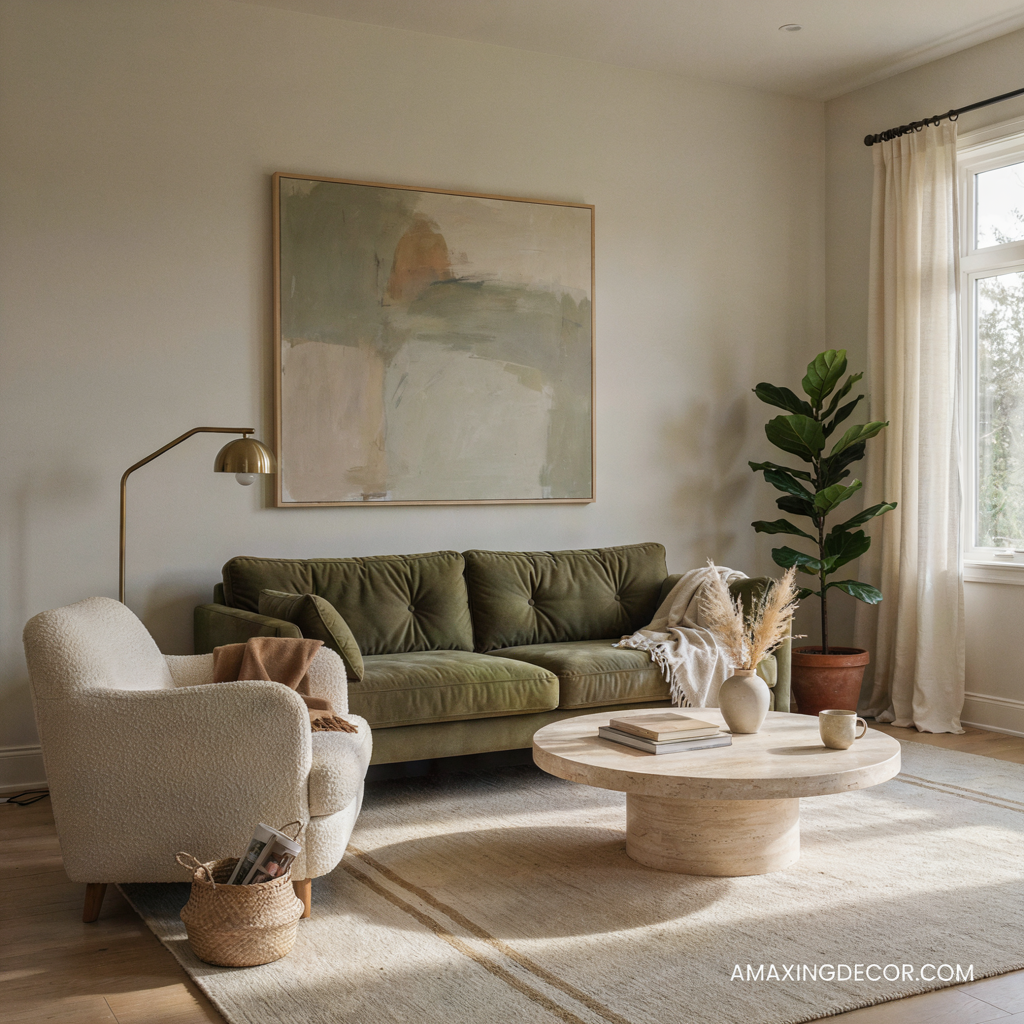
Olive green is one of those rare colours that can make a living room feel both restful and full of character. It has the natural calmness of green, but its warm, earthy undertone prevents it from feeling cold. When combined with cream, beige, taupe, warm white, tan and natural wood, it creates an interior that feels comfortable, grounded and easy to live with.
The key is balance. Too much dark olive can reduce the sense of space, while too many pale neutrals may make the room feel unfinished. A successful scheme uses different tones, textures and materials to give the room depth without overwhelming it.
Whether you are considering an olive green feature wall, a green sofa or just a few subtle accessories, these olive green living room ideas will help you build a warm and coordinated space.
For more autumn home décor ideas read The Complete Autumn Home Décor Guide: Colours, Textures and Room Ideas
Olive Green Living Room Ideas
Why olive green works so well in a living room
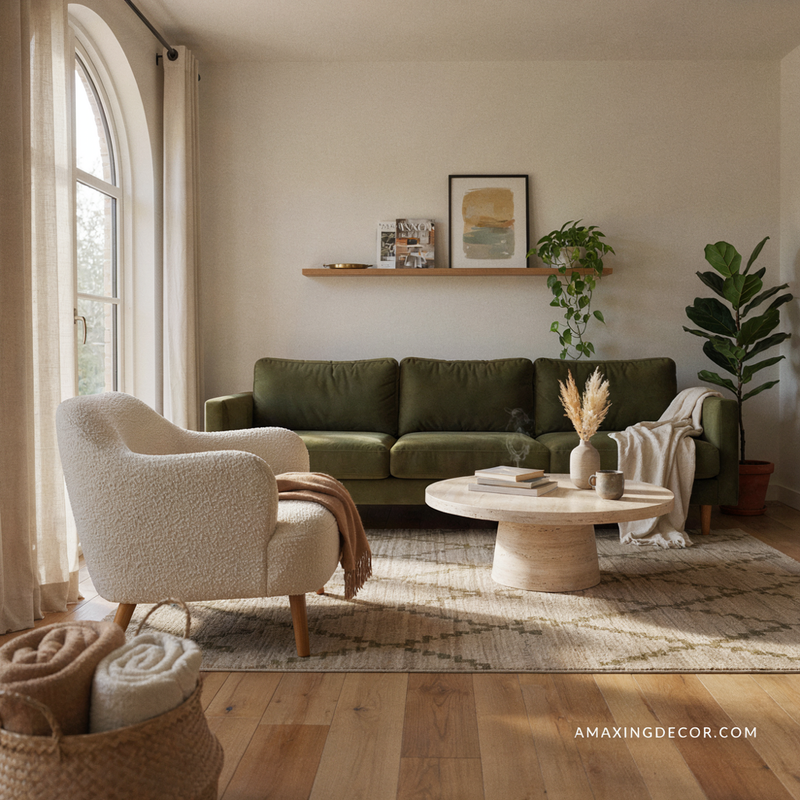
Olive green sits somewhere between green, brown and yellow. This complex undertone makes it more adaptable than a bright emerald or a cool mint. It naturally complements the colours found in timber, stone, linen, leather and woven fibres.
It also works across several interior styles. In a traditional room, olive green can feel established and elegant. In a modern space, it brings softness to clean lines. In a rustic or country interior, it connects naturally with wood and handmade materials. Used with simple furniture and pale walls, it can even suit a minimalist home.
Olive green is especially effective during autumn because it pairs beautifully with rust, burnt orange, ochre and brown. However, it is not limited to seasonal decorating. A well-planned olive and neutral palette can remain in place throughout the year, with smaller accessories changed as the seasons move on.
The best warm neutrals to pair with olive green
Not every neutral produces the same effect. Before choosing paint, furniture or textiles, decide how light, warm and formal you want the room to feel.
Warm white
Warm white is ideal when you want olive green to provide the main contrast while the room remains bright. Look for whites with cream, yellow or soft beige undertones rather than stark blue-white shades. Use warm white on the ceiling, woodwork or surrounding walls to give the green space to breathe.
Cream
Cream produces a softer and more traditional result. It works particularly well with deep olive walls, dark wooden furniture and antique brass. Cream curtains, cushions or an upholstered armchair can lift a darker colour scheme without creating a harsh contrast.
Beige and oatmeal
Beige and oatmeal are excellent choices for larger upholstered pieces. A beige sofa against an olive wall creates a calm foundation that can be updated with cushions and throws. These shades also suit natural linen, wool and boucle, adding visual warmth through texture.
Taupe and mushroom
Taupe and mushroom contain grey and brown undertones, making them useful in a more sophisticated or contemporary room. They reduce the rustic quality of olive green and create a quieter, layered palette.
Tan and caramel
Tan leather, caramel velvet and cognac-coloured accents bring richness to an olive living room. Because these shades have a stronger presence, use them for one or two statement elements rather than every surface.
| Neutral shade | Overall effect | Best places to use it |
|---|---|---|
| Warm white | Light and fresh | Walls, ceiling, woodwork and lampshades |
| Cream | Soft and classic | Curtains, rugs, cushions and armchairs |
| Beige or oatmeal | Relaxed and natural | Sofas, large rugs and textured throws |
| Taupe or mushroom | Refined and contemporary | Walls, upholstery and cabinetry |
| Tan or caramel | Rich and welcoming | Leather seating, cushions and small accents |
Choose how much olive green to use
You do not need to paint every wall green. The right amount depends on the room’s size, orientation and available daylight.
Use olive green on all four walls
A fully painted olive living room can feel cocooning and elegant. This approach is best in a room with good natural light or one intended to feel cosy. Keep the ceiling and some large furnishings pale to prevent the scheme from becoming visually heavy.
For a more enveloping effect, paint the skirting boards and door frames in the same green. This colour-drenched treatment creates a polished look, but it is a bigger commitment than a single feature wall.
Create an olive green feature wall
An olive feature wall is a practical starting point if you are unsure about using a strong colour throughout the room. Choose the wall that already attracts attention, such as the wall behind the sofa, fireplace or media unit.
Avoid selecting a wall simply because it is empty. A successful feature wall should strengthen the room’s natural focal point. Paint the remaining walls in warm white, light beige or pale greige.
Introduce green through furniture
An olive green sofa or armchair can become the centre of a neutral room. Velvet creates a richer, more formal appearance, while linen-look or woven upholstery feels relaxed. Before buying a large green sofa, test fabric samples in the room during morning, afternoon and evening light.
Start with accessories
If you prefer a flexible scheme, introduce olive through cushions, throws, curtains, ceramics, artwork and plants. Repeating the colour in three or four areas will make the result feel intentional. One isolated green cushion is unlikely to establish a complete palette.
Olive green and beige living room ideas
An olive green and beige living room is easy to live with because both colours have natural, earthy qualities. The combination works best when you include several variations rather than using one exact green and one exact beige everywhere.
Start with a dominant neutral, such as beige walls or a large oatmeal sofa. Add olive as the secondary colour through an armchair, curtains or a painted alcove. Finish with smaller dark accents—perhaps a black-framed picture, a deep brown side table or an aged-brass lamp—to give the pale elements definition.
A balanced palette could include:
- Warm white walls
- One olive green sofa or pair of armchairs
- A large cream and beige rug
- Medium-toned oak furniture
- Olive, rust and oatmeal cushions
- A small amount of charcoal, dark brown or antique brass
This approach creates a clear colour hierarchy. The neutrals keep the space open, while olive gives it identity.
Bring in natural wood
Wood is one of the most effective materials to use with olive green. Its warmth reinforces the earthiness of the colour and prevents a neutral scheme from feeling flat.
Light oak gives the room a brighter, more contemporary appearance. Medium oak and walnut add depth, while darker stained wood can create a traditional or dramatic result. There is no need to match every wooden item perfectly. A room often feels more natural when it contains two or three related wood tones.
Try to repeat each tone at least once. For example, a walnut coffee table could relate to a picture frame, while a lighter oak shelf connects with a side table. Avoid filling a small room with several bulky dark-wood pieces, especially when the walls are also deep olive.
Layer textures to keep the scheme interesting
An olive and neutral palette is intentionally restrained, so texture becomes important. Without it, beige walls, a neutral sofa and green cushions can look rather one-dimensional.
Combine a selection of contrasting surfaces:
- Soft linen or cotton curtains
- A wool or flatwoven rug
- Boucle or chenille upholstery
- Velvet cushions used sparingly
- Woven baskets made from rattan or seagrass
- Matt ceramic vases
- Natural or limewashed wood
- A knitted throw for colder months
The aim is not to use every texture available. Choose three or four that suit the style of the room and repeat them in different places. For instance, a woven basket can relate to a natural-fibre lampshade, while a linen cushion echoes the curtains.
Add a carefully chosen accent colour
Olive green and warm neutrals can stand alone, but a controlled accent colour will give the room more personality.
Burnt orange and rust
Rust and burnt orange bring out the warmer undertones in olive. They work particularly well in autumn, but muted versions can remain in the room all year. Add them through cushions, a patterned rug, artwork or one ceramic piece
How to Style Your Home with Burnt Orange for Fall.
Mustard and ochre
Mustard yellow creates a lively but still earthy contrast. Use it in smaller quantities because both mustard and olive are visually strong. One ochre armchair or two mustard cushions may be enough.
Brighten Your Home with Mustard Yellow This Fall.
Blush and dusty pink
Muted pink softens olive green and can create a more delicate, contemporary space. Select dusty, earthy pink rather than a bright sugary shade. It is particularly effective in artwork, cushions and floral arrangements.
Burgundy and deep red
For a richer, more traditional room, add burgundy or oxblood accents. These colours work best in well-lit spaces and should be balanced with cream or warm white.
Decorating with autumn reds and rust tones
Select the right sofa and seating
The sofa is usually the largest item in a living room, so it has a major effect on the balance of the scheme.
If the walls are olive green, a cream, oatmeal, beige or tan sofa will create contrast. If the walls are neutral, an olive sofa can become the focal point. A brown leather sofa also works well, but introduce cream textiles to soften the combination of brown and green.
Consider the practical needs of the household as well as appearance. Very pale upholstery may require more maintenance in a busy family home. Mid-beige, mushroom or textured oatmeal fabrics often disguise everyday marks better while preserving the warm-neutral look.
Mixing seating can make the room feel collected rather than purchased as a single set. Pair a neutral sofa with an olive armchair, or add a tan leather chair to an olive sofa. Keep one repeated detail—such as wood tone, cushion colour or leg shape—to maintain visual consistency.
Choose curtains and window treatments
Curtains can either lighten an olive room or extend its sense of depth. Full-length cream or natural linen curtains are a reliable choice against green walls. They soften the edges of the window and help reflect daylight.
Olive curtains against warm-white walls create a stronger statement. Select a fabric with visible weave or gentle movement so the expanse of green does not feel too solid. If privacy allows, layer curtains with a light-filtering blind.
In a compact or dark room, hang the curtain pole slightly above and wider than the window frame. This allows more of the glass to remain visible when the curtains are open and can make the window appear larger.
Ground the room with the right rug
A rug connects the seating area and helps distribute colour across the lower part of the room. Cream, beige and oatmeal rugs lighten deep green walls, while traditional patterns containing olive, rust and faded red can bring a more layered appearance.
Choose a rug large enough for at least the front legs of the main sofa and chairs to sit on it. A rug that floats in the middle of the floor can make the room and furniture appear disconnected.
For busy areas, consider a low-pile or flatwoven rug that is easier to maintain. Heavily textured cream rugs look inviting but may be less practical around children, pets or frequently used entrances.
Use lighting to enhance olive green
Olive green can change noticeably under different light sources. Warm bulbs emphasise its golden undertones, while cool bulbs may make it look duller or greyer.
Use several light sources rather than relying on one ceiling fitting:
- A central pendant for general light
- A floor lamp beside the sofa or reading chair
- Table lamps on consoles or side tables
- Wall lights or picture lights for atmosphere
Fabric, paper or woven lampshades diffuse light gently and suit the natural palette. Antique brass, aged bronze and dark metal lamp bases add contrast without looking too bright. Aim for warm-white lighting, typically around 2700K, in areas used for relaxing.
Decorate walls without overcrowding them
Olive walls make an attractive background for art. Botanical prints are an obvious choice, but they are not the only option. Abstract work in cream, terracotta, black or muted pink can stop the room from feeling overly themed.
Warm-white mounts and wood or antique-brass frames stand out clearly against dark green. On pale neutral walls, artwork can be used to repeat olive from furniture elsewhere in the room.
A gallery wall works best when it has a common feature, such as a restrained colour palette, similar frame tones or consistent spacing. If the room already contains patterned curtains and a detailed rug, one large artwork may create a calmer result than numerous small frames.
Mastering the Art of Gallery Walls: Tips and Tricks
Style shelves, coffee tables and fireplaces
Small surfaces are where a natural colour scheme can easily become cluttered. Use accessories in groups and leave some empty space around them.
For a coffee table, combine items of different heights: a small stack of books, a low bowl and a vase with a branch or seasonal foliage. On shelves, mix books with ceramics, framed pictures and one or two natural objects. Avoid placing an ornament in every available gap.
Around a fireplace, the olive-and-neutral scheme can be reinforced with a wooden mantel, cream candles, a stoneware vase and restrained seasonal greenery. Always keep decorations, dried materials and textiles a safe distance from flames and heat sources.
Add plants without turning the room into a jungle
Plants naturally complement olive green, but too many similar green tones can blur together. Choose plants with different leaf shapes or variegation and give them enough visual space.
A tall plant can soften an empty corner, while a trailing plant works well on a high shelf. Use planters in cream, terracotta, stone or aged metal to create contrast. If the room receives limited daylight, choose plants suitable for those conditions or use a small number of convincing artificial stems.
Olive green ideas for small or dark living rooms
You can use olive green in a small living room, but pay attention to placement and light reflection.
- Keep the ceiling, curtains and at least one large piece of furniture pale.
- Use olive on the lower half of a wall, in an alcove or behind the sofa.
- Position mirrors where they can reflect daylight rather than a blank dark wall.
- Choose furniture with visible legs to preserve a sense of floor space.
- Limit heavy patterns and bulky dark furniture.
- Test several paint samples because olive can look browner in low light.
If the room is naturally dark and you enjoy a cosy atmosphere, it may be better to embrace the depth rather than force it to look bright. Use deep olive walls, warm lamps, pale textiles and reflective touches of brass to create an intentional, enveloping room.
Olive green ideas for different interior styles
Modern
Combine a muted olive wall with a low-profile beige sofa, clean-lined oak furniture and black accents. Keep accessories limited and use large-scale abstract art.
Rustic
Pair olive with exposed timber, aged leather, linen, wool and handmade pottery. Introduce rust or ochre through a few soft furnishings.
Traditional
Use a deeper olive with cream upholstery, dark wood, patterned curtains and antique-brass lighting. Burgundy and warm red can add richness.
Scandinavian-inspired
Keep most of the room warm white or pale beige, then add soft olive through one chair, cushions and simple botanical art. Choose light oak and functional furniture.
Bohemian
Layer olive with terracotta, natural fibres, patterned textiles and plants. Maintain some repeated neutral areas so the mix still feels controlled.
A simple step-by-step decorating plan
If you are starting from an empty room—or trying to correct a scheme that does not feel coordinated—work from the largest decisions to the smallest.
- Assess the light. Notice how the room looks at different times of day and identify whether the natural light feels warm or cool.
- Choose the main neutral. Decide whether warm white, cream, beige or taupe will form the largest part of the palette.
- Choose the role of olive. Use it on the walls, on the main sofa, on one feature item or as a smaller accent.
- Select the main furniture. Work with pieces you already own before buying decorative accessories.
- Add wood and natural materials. Use these to connect the green and neutral parts of the room.
- Layer lighting. Plan general, task and atmospheric lighting.
- Introduce texture. Add curtains, a rug, cushions and a throw in varied but related materials.
- Choose one accent colour. Rust, mustard, blush or burgundy can add depth.
- Finish with art and accessories. Repeat the palette without filling every surface.
- Edit the room. Remove anything that competes with the focal point or makes the scheme feel crowded.
Common mistakes to avoid
Choosing olive paint without testing it
Olive paints can lean yellow, brown or grey depending on the light. Paint large sample areas and view them beside the flooring, sofa and curtains before making a final decision.
Using only one shade of beige
A completely uniform beige background can look flat. Combine cream, oatmeal, taupe and wood tones to create depth.
Making every accessory green
Once you have an olive wall or sofa, there is no need to repeat green in every object. Allow neutral and contrasting elements to break up the colour.
Forgetting visual contrast
Mid-tone olive, mid-tone wood and mid-tone beige can merge together. Add something clearly lighter and something clearly darker to define the scheme.
Following autumn styling too literally
Pumpkins, leaf prints and orange accessories can be enjoyable for a few weeks, but the underlying room should work beyond the season. Build a year-round olive and neutral foundation, then add temporary autumn details in small quantities.
Final thoughts
The most successful olive green living room ideas are built around balance. Olive provides depth and character, while warm neutrals keep the space soft and welcoming. Natural wood, layered textiles and carefully chosen lighting then connect the colours and make the room feel complete.
You can make a significant change with an olive feature wall or statement sofa, but a full renovation is not necessary. Even a combination of green cushions, warm timber, a cream rug and botanical artwork can introduce the palette effectively. Begin with the elements you already own, test colours in the actual room and build the scheme gradually.
For more room-by-room colour combinations and seasonal styling advice, explore our complete guide to autumn home décor ideas.
Frequently asked questions
Is olive green a good colour for a living room?
Yes. Olive green is calming, versatile and warmer than many other greens. It works well with common living-room materials such as wood, leather, linen and stone. The amount you use should reflect the room’s size and natural light, but it can work as a wall colour, furniture colour or smaller accent.
What neutral colour goes best with olive green?
Warm white, cream, beige, oatmeal, taupe and mushroom all work well with olive green. Warm white creates the clearest contrast, while beige and oatmeal produce a softer, more natural result. Avoid very cold grey or blue-white neutrals unless you have tested them beside the exact olive shade.
What accent colours go with an olive green living room?
Burnt orange, rust, mustard, dusty pink, burgundy and warm brown all complement olive green. Black can be used in small amounts to add definition, while antique brass introduces warmth and a subtle reflective detail. Usually, one main accent colour is enough.
Does olive green make a living room look dark?
Deep olive can make a room feel darker, especially when used on every wall in a north-facing or poorly lit space. Balance it with a pale ceiling, light curtains, a cream rug and several warm light sources. In some rooms, embracing the darker effect can create a cosy and sophisticated atmosphere.
What colour sofa works with olive green walls?
Cream, oatmeal, beige, mushroom and tan sofas all work with olive green walls. A pale sofa creates contrast, while tan leather produces a richer and more traditional look. Consider durability as well as colour, particularly in a busy household.
Can I use an olive green sofa in a small living room?
Yes. Keep the surrounding walls warm white or pale beige and use a light rug to balance the visual weight of the sofa. Furniture with raised legs can also help the room feel less crowded. Repeat olive only a few times through artwork or small accessories.
What curtains go with an olive green living room?
Cream, natural linen, oatmeal and warm-white curtains are reliable choices for olive walls. If the walls are neutral, olive curtains can create a stronger focal point. Full-length curtains with a visible natural texture usually suit this earthy palette particularly well.
Do grey and olive green work together?
They can, but the undertones matter. Warm greys, greige, mushroom and taupe tend to complement olive more successfully than icy blue-grey. Add cream, timber or tan to keep the room from feeling cool or dull.
What metal finishes suit olive green?
Antique brass, aged bronze, black metal and brushed gold all complement olive green. Brass and bronze enhance its warmth, while black adds sharper definition in a modern room. Keep the number of metal finishes limited for a coordinated result.
How can I update an olive living room for different seasons?
Keep the main furniture, walls and large rug neutral or olive, then change smaller details. Use rust, ochre and wool in autumn; deeper red and candlelight in winter; blush, cream and fresh foliage in spring; and lighter linen or woven accessories in summer.





One thought on “Olive Green Living Room Ideas with Warm Neutrals”